Explore the next step
Need treats, monitoring or full meals?
Use the category that matches what you actually want the device to do.

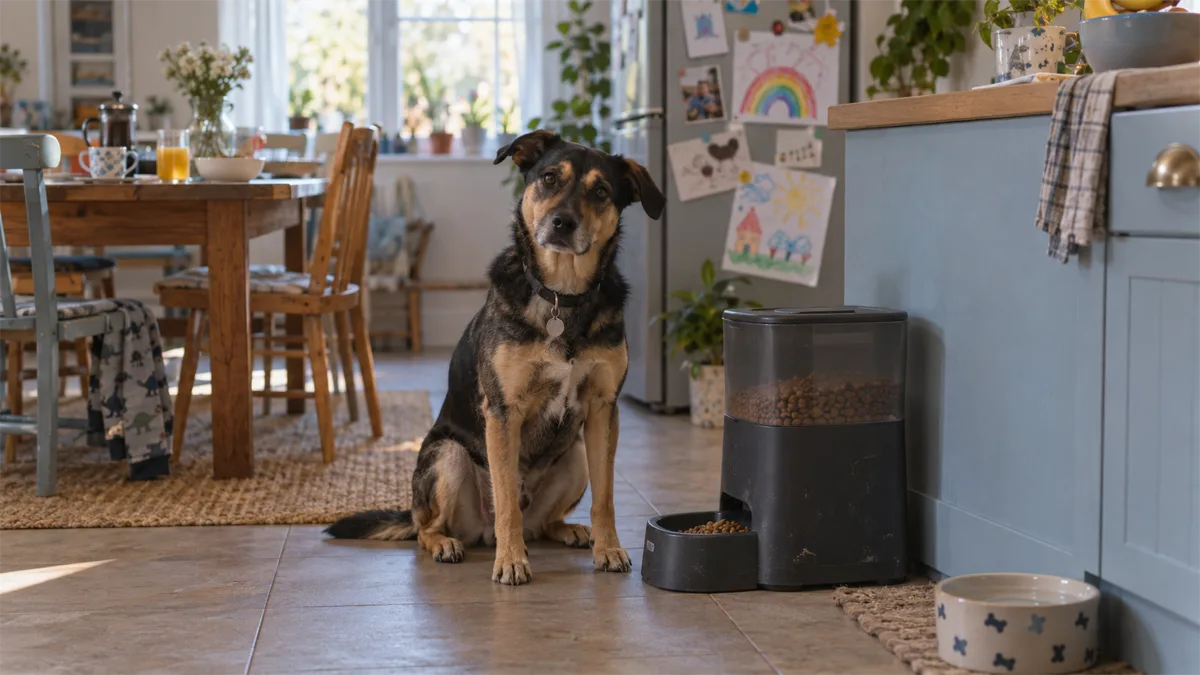
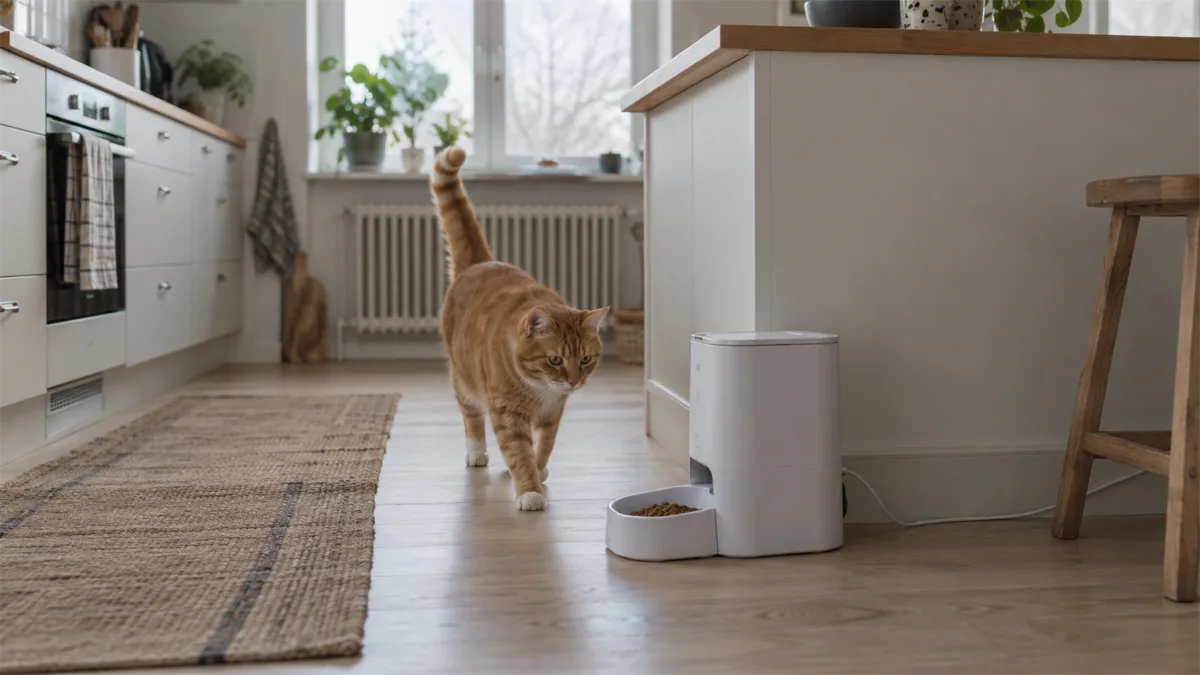
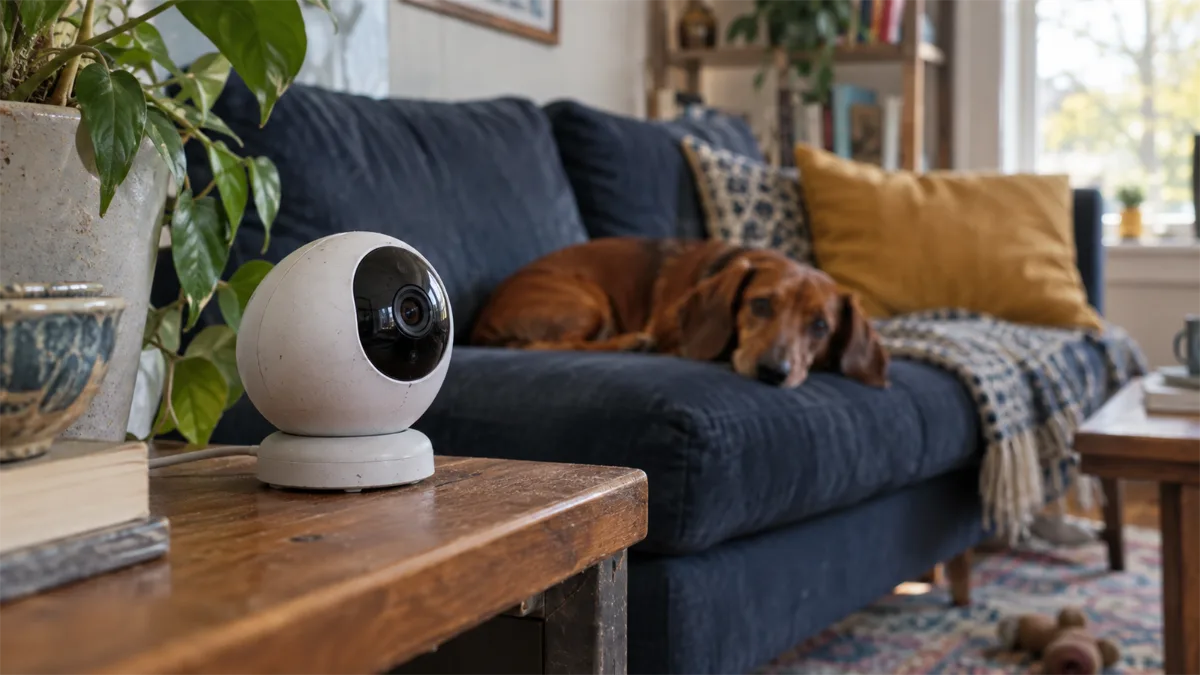
Choose by use case
The four treat-dispenser types worth comparing
Treat dispensers solve different jobs. Pick the control style first, then compare models inside that category.
An automatic treat dispenser covers more ground than the name suggests — everything from a simple button a dog presses for a snack, to a camera-equipped device you can trigger from your phone across town, to a fully scheduled dispenser that drops a treat at the same time every day with no one involved at all. A pet treat dispenser and an automatic treat dispenser are generally the same category described two ways — “pet” just signals it isn’t dog-specific by design, even though most models on the market today are built and marketed primarily for dogs. This guide walks through the real types, what to actually look for, and where a treat dispenser fits next to a full automatic feeder.
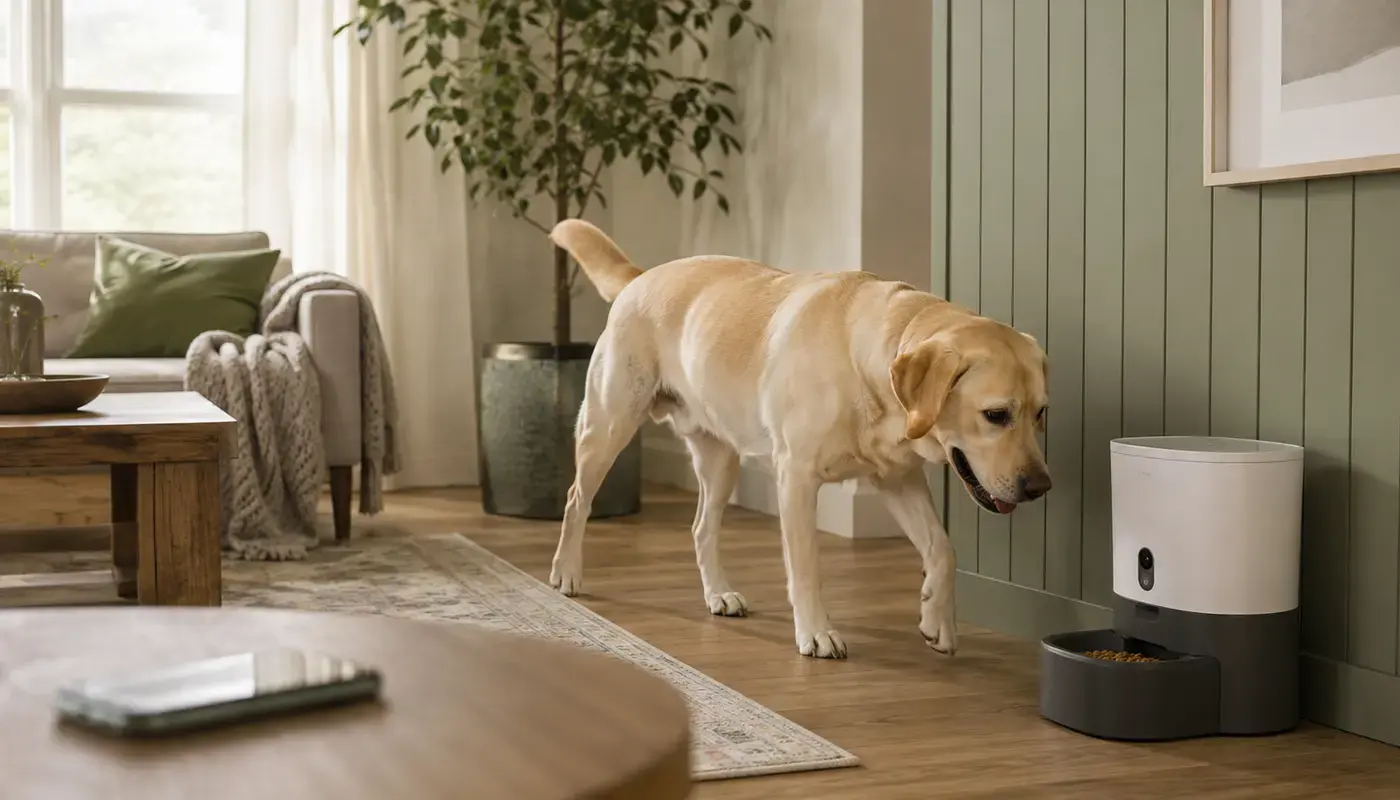
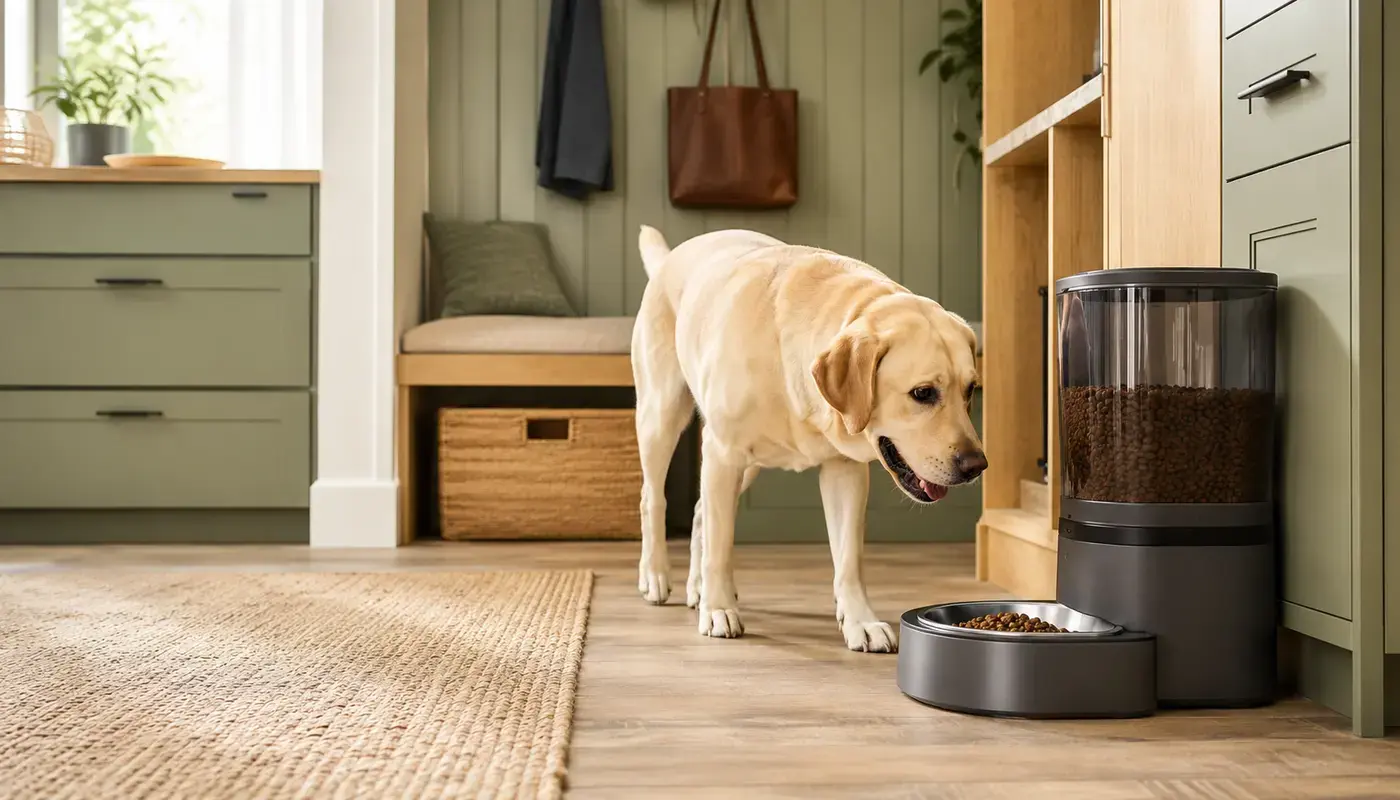
One thing worth clarifying up front: a treat dispenser is not a substitute for a real meal feeder. It’s built for small, occasional rewards — training treats, an enrichment snack, a “thinking of you” while you’re out — not for portioned daily meals. If you’re looking for something to handle actual feeding on a schedule, see our automatic dog feeders or automatic cat feeders guides instead; several of those models also include a camera, which is a meaningfully different product from a treat-tossing camera even though they get grouped together in searches.
Types of Automatic Treat Dispensers
| Type | Delivery | Best for |
|---|---|---|
| Button-press dispenser | Drops, dog-triggered | Self-reward games, casual enrichment |
| Remote reward trainer | Drops, owner-triggered | Active training sessions |
| Camera + app treat tosser | Tosses, remote/app-triggered | Rewarding while away from home |
| Timed/scheduled dispenser | Drops, pre-programmed | Hands-off daily routine |
Simple Button-Press Dispensers
The most basic and least expensive type: a small hopper (often around 6 ounces) with a button your dog presses — usually with a paw or nose — to release a treat, sometimes doubling as an automatic dog snack feeder that also drops treats at set intervals without any input at all. These are genuinely useful for teaching a dog to self-reward, for solo enrichment while you’re busy, or as a low-stakes way to introduce the idea of an automatic dog biscuit feeder before spending more on a training-grade unit. The honest limitation: several budget models in this category have a narrow hopper opening, and reviewers consistently note inconsistent dispensing — sometimes several treats fall at once, sometimes none. Treat this category as a fun, low-cost entry point rather than something you’d rely on for precise portioning.
Remote Reward Trainers
A genuinely different use case: a remote dog trainer lets you, the handler, trigger a treat drop from a handheld remote during an active training session — no camera, no app, just a button in your hand and a device that drops (never tosses, so it doesn’t startle a dog mid-behavior) a treat on command from across the room. These are purpose-built for real training work — duration sits and downs, recall, crate training, agility tunnel work, reinforcing calm behavior at a distance, even separation-anxiety protocols — and they’re worth the higher price over a button-press toy specifically because the hopper and dispensing mechanism are built for consistency: a trainer that under- or over-delivers mid-session undermines the exact behavior you’re trying to reinforce. Some models are also built to run especially quietly for sound-sensitive dogs, usually by trading off hopper flexibility — a narrower, shaped opening that only accepts certain treat sizes.
Camera + App Treat Tossers
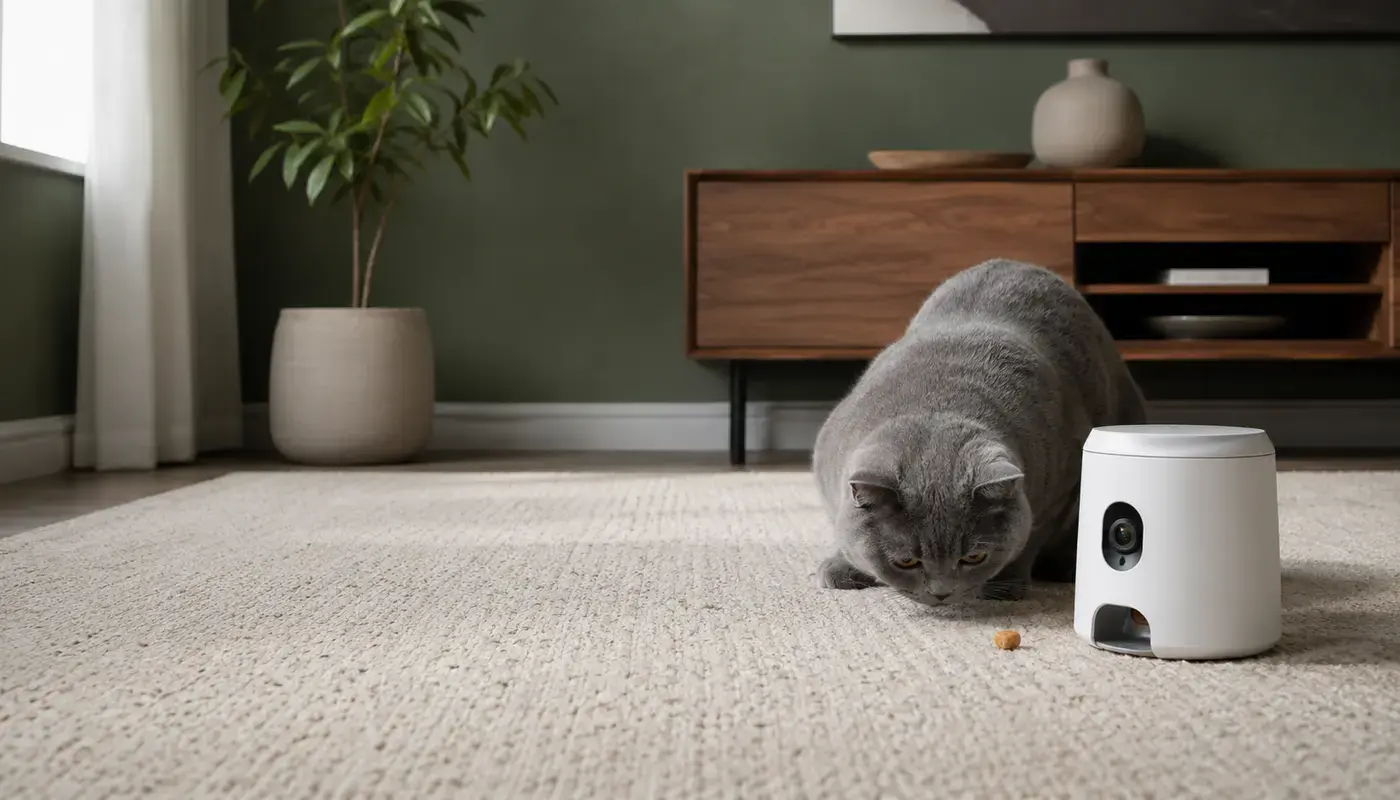
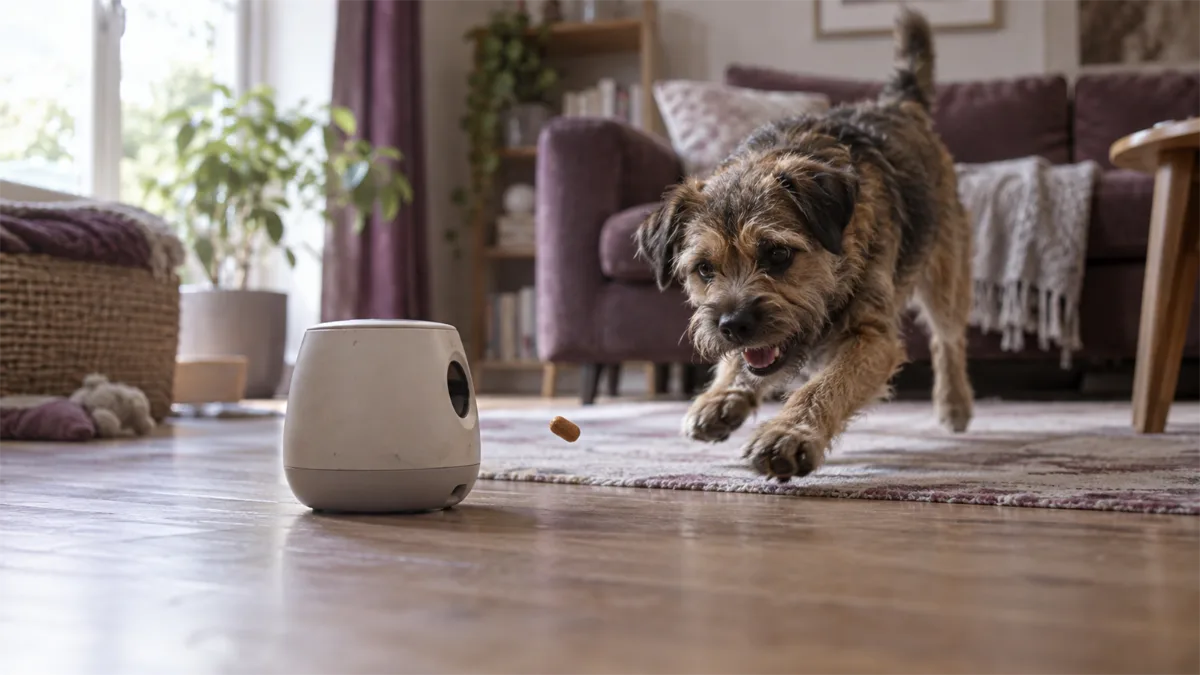
This is the category people often picture first when they hear “automatic treat dispenser” — a countertop device with a built-in camera, live video streaming to your phone, and a button in the app that tosses (not just drops) a treat toward your dog with real force, from wherever you happen to be. Most models here add person and pet detection with push notifications, so you know when your dog wanders by even if you’re not actively checking in. Ongoing video history or cloud storage sometimes sits behind a paid subscription, so check whether live viewing alone is free before assuming the full feature set is included. This is also exactly where confusion with a full meal feeder with camera creeps in — a treat tosser is not a substitute for one, since it holds a small stock of treats, not a real meal’s worth of food, and treating it as your dog’s actual feeding plan while you’re away is a mistake. If you want video plus actual scheduled meals, that’s our dog feeder with camera guide, not this category.

Furbo 360° Dog Camera — core-features package
Best for: Remote treat tossing with a rotating view.
- 1080p rotating 360° view, 4x digital zoom
- treat tossing; about 100-treat capacity
- two-way audio; video history needs a Furbo Nanny subscription
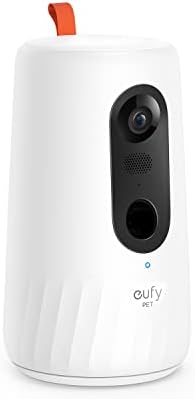
eufy Pet Camera D605
Best for: Treat tossing with on-camera recording and no required subscription.
- 1080p video; spins 270° horizontally
- built-in 16 GB local storage
- adjustable treat-launch distance; 2.4 GHz WiFi
Timed and Scheduled Treat Dispensers
A timed treat dispenser takes the person out of the loop entirely — you program specific times, and a treat drops automatically, no button press or app trigger needed. This is a genuinely different use case from both categories above: it’s not for active training (no one’s there to mark the moment a behavior happens) and it’s not for remote, on-demand rewarding either. It suits a consistent daily routine instead — a scheduled snack while you’re at work, spacing treats through the day for a dog on a calorie budget, or simple enrichment for a dog who’s home alone for long stretches. Some electronic dog treat dispenser models combine this with the camera-and-app features above, so scheduling and remote/on-demand tossing aren’t necessarily an either-or choice — check whether a specific model supports both if you want the routine plus the option to trigger an extra reward yourself. Our timed and button-press treat dispenser guide covers both types in more detail.
Automatic vs. Pet Treat Dispenser: Is There a Real Difference?
Not really, in practice. “Automatic treat dispenser” and “pet treat dispenser” both describe the same functional category — a device that dispenses treats without you handing them over by hand. “Pet” is the more animal-neutral of the two terms and shows up more on listings that also work for cats, while “automatic” leans slightly toward emphasizing the hands-free mechanism itself. In listings and reviews you’ll also see auto dog treat dispenser, auto treat dispenser for dogs, automatic dog treat feeder, and automatic treat feeder for dogs used more or less interchangeably with these — none of them signal a functionally distinct product, so don’t expect the terminology alone to tell you which type (button-press, remote trainer, camera tosser, or timed) you’re actually looking at. That’s a separate question this guide’s sections above are built to answer.
What to Look For
- Treat size compatibility — check the hopper opening against the actual treats you use; several dispensers have narrow, shaped openings that only fit certain treat shapes and jam or misfire with anything larger, irregular, or crumbly
- Portion consistency — budget button-press models are the most likely to under- or over-dispense from press to press; look for reviews that specifically mention consistency over multiple uses, not just the feature list on the box
- Power source — most run on batteries, which is fine for something that stays in one spot but worth checking if you plan to move it around the house; a few plug in instead
- Camera and app, only if you’ll actually use them — they add real cost and complexity for a feature that’s genuinely useful for some households (checking in while at work, remote rewarding) and just an unused extra for others who really only want a training tool or a simple hands-off snack schedule
- Cleaning access — treats leave crumbs and residue in a hopper the same way kibble does; a dispenser that’s hard to open and wipe out becomes a hygiene problem faster than the marketing photos suggest
Treats Still Count as Calories
It’s easy to treat an automatic dispenser as separate from “real” feeding, but every treat it dispenses is still food. A dispenser that fires off treats on a loose schedule or lets a dog self-reward freely can add up to a meaningful share of daily calories without you tracking it the way you’d track a meal. If you’re using one regularly — especially a timed model running multiple times a day — it’s worth accounting for those treats against your dog’s overall diet rather than treating the dispenser as calorie-free enrichment. Our free pet food calculator can help you see where treats fit into your dog’s daily total.
Best Automatic Treat Dispensers
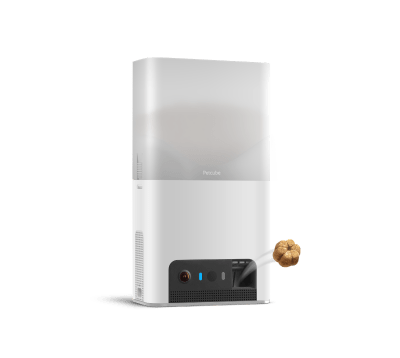
Petcube Bites 2 Lite
More compact camera-and-treat option with app alerts and two-way audio.
We’re matching picks to the categories above rather than ranking everything on one scale, since a training tool and a remote camera tosser aren’t really competing for the same buyer.
- Best for active training: Treat & Train–style remote reward trainer. These are built specifically for real training work — drop (not toss) delivery so it doesn’t startle a dog mid-session, roughly 3-cup hoppers, and interchangeable dispenser discs to handle different treat sizes. This category holds up well for agility work, duration sits and downs, and separation-anxiety protocols where consistent, quiet reinforcement matters more than any smart features.
- Best quiet option for noise-sensitive dogs: A remote trainer specifically built for silent delivery is worth the search if your dog is sound-sensitive — some models in this category are noticeably quieter than others, though usually at the cost of a narrower hopper opening that restricts which treat shapes fit reliably. Worth testing with your actual treats before committing.
- Best for remote rewarding with video: a camera-equipped treat tosser. These stream live video to your phone, include pet and person detection with notifications, and genuinely toss treats with enough force to reach a dog across a room — not just drop them at the base of the unit. Ongoing cloud video features sometimes sit behind a subscription. This is the closest thing to interacting with your dog while you’re not home, but remember it’s snack-sized rewards, not a meal replacement.
- Best scheduled/hands-off option: a timed treat dispenser with app scheduling. Some newer models combine a camera with true time-based scheduling, so treats drop automatically at set times whether or not you’re actively checking the app — useful for a consistent daily routine without needing to remember to trigger it yourself each day.
- Best budget option: a basic button-press dispenser. These are the simplest way into the category, often doubling as a way to teach a dog to nose- or paw-press for a reward. The honest tradeoff for the price: several budget models have small hopper openings that dispense inconsistently — sometimes multiple treats, sometimes none — so treat this as a training/enrichment tool rather than something you rely on for precise portioning.
As with any best automatic dog treat dispenser list, match the pick to the actual use case — training, remote rewarding, or a scheduled routine — rather than picking by price or features alone, and check current listings before buying since pricing and availability shift often in this category.
Treat Dispensers for Cats, Too
Most of the product category, and most of the search interest, centers on dogs — button presses, remote trainers, and camera tossers are all designed and marketed with dogs in mind, since dogs are more reliably trained to interact with a button or trigger, and there’s a much bigger training-tool market built around dogs specifically. That said, nothing about a pet treat dispenser is mechanically dog-only. Gravity and timed treat dispensers work the same way regardless of which animal is eating from them, and a scheduled snack or simple enrichment dispenser can suit a cat just as well as a dog — it’s really only the “press a button” and “trained response to a camera alert” categories that lean dog-specific in practice, more because of typical cat behavior than any hardware limitation.
Frequently Asked Questions
What’s the difference between an automatic treat dispenser and an automatic feeder?
A treat dispenser handles small, occasional rewards — training treats or snacks — not full meals. An automatic feeder is built for actual daily food portions. Some feeders add a camera and get confused with treat tossers, but they’re different products solving different problems.
Do timed treat dispensers work for training?
Not really — training rewards need to happen at the exact moment of the behavior you’re reinforcing, which a pre-set schedule can’t do. A remote reward trainer (button-triggered by you) or hand-delivered treats work better for active training; a timed dispenser suits a routine snack instead.
Is a battery-operated dog treat dispenser reliable enough to leave unattended?
Reasonably, for short stretches — but battery life varies a lot by model and how often it’s dispensing, and a dead battery on a timed unit means a missed scheduled treat with no alert. If you’re relying on one daily, check the battery life claims against how many times a day it’s actually firing, and don’t treat it as fully unattended-proof for more than a few days at a stretch.
Can an automatic treat dispenser replace training treats given by hand?
For active training, no — the timing precision of marking a behavior the instant it happens is hard to replace with any device. Where these genuinely help is extending your reach: rewarding from a distance during recall or duration work, or keeping a dog engaged in solo enrichment when you’re not actively training at all.