
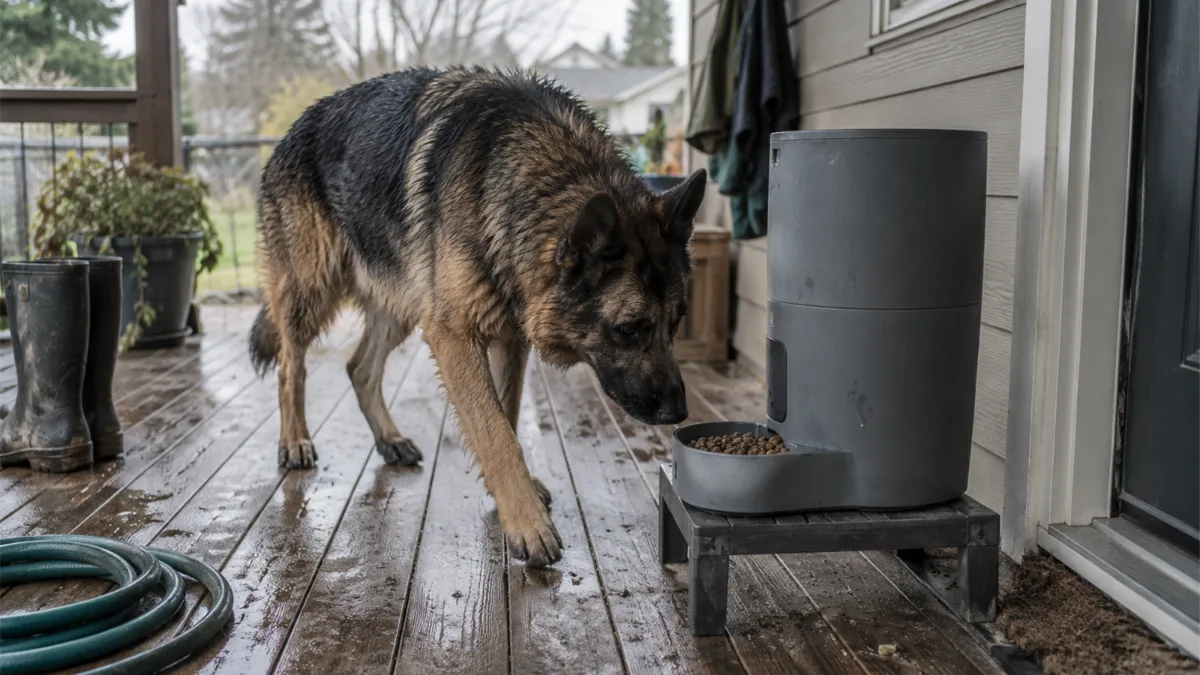
Weatherproofing: Rain, Moisture, and Mold
Moisture is the biggest threat to an outdoor setup in two separate ways: it gets into the electronics of a timed unit and causes failures, and it gets into the food itself, where damp kibble molds fast. A weatherproof housing with a sealed lid and a raised, well-drained base handles the water side; keeping the hopper genuinely sealed (not just covered) handles the food side. Covered placement — a roof, overhang, or dedicated enclosure — still does more for reliability than any single “weatherproof” label, the same as it does for any electronic outdoor equipment.
Keeping Pests Out: Raccoons, Birds, and Insects
Outdoor dog feeders face a wider range of pests than you might expect. Raccoons are the obvious one, but birds are a real problem too — several heavy-duty gravity feeders use a magnetized door specifically because birds and raccoons can otherwise flip open a basic lid. Insects are the quieter issue: ants and other bugs are drawn to kibble dust and residue, and a moat-style base (a small water channel around the feet) is a simple, effective way to keep them out since most insects can’t cross standing water. A locking or magnetized lid handles the larger pests; the moat trick handles the small ones neither lid design solves.
Power Without an Outlet: Battery Life and Backup
Most outdoor spots don’t have a nearby outlet, which splits outdoor feeders into two real categories. A gravity feeder needs no power at all — it’s just a hopper and a mechanical door, which sidesteps the power problem entirely. An electric, timed unit needs battery power (some report battery backups lasting many weeks between changes) or, less commonly, a solar trickle charger paired with the battery if you want to avoid replacing them as often. If you don’t need scheduling or portion control, a no-power gravity feeder removes an entire category of things that can fail outdoors.
Temperature Extremes: The Overlooked Factor
This is the part most outdoor feeder buyers don’t think about until it’s a problem: cold weather drains batteries faster and can cause electronics to behave unpredictably, while heat degrades battery life and can warp plastic housings over time. A fully mechanical gravity feeder is largely immune to this, since there’s no battery or circuit board to fail in the first place — one more reason a simple gravity setup is worth considering for a genuinely harsh climate, even if you give up scheduling and portion control to get it.
Outdoor Automatic Dog Feeder with Timer: What Changes
An outdoor automatic dog feeder with timer (or outdoor timed dog feeder) adds real convenience — scheduled portions, less manual refilling — but it also means adding the exact electronics that weather and temperature extremes threaten. See our timed dog feeder guide for how the scheduling mechanism itself works; the outdoor-specific tradeoff is that you’re weighing that convenience against a genuinely higher failure risk than an indoor timed feeder faces, which is worth factoring into whether a gravity feeder is the more practical choice for your setup. For the hydration side of an outdoor station, our automatic dog water dispenser guide covers reservoir size, fountains and cleaning trade-offs.
Outdoor Feeder Options to Compare
These two Amazon listings were checked on October 20, 2026. The descriptions below are listing claims, not independent outdoor durability tests. Neither listing establishes that food can be left exposed to rain or pests.
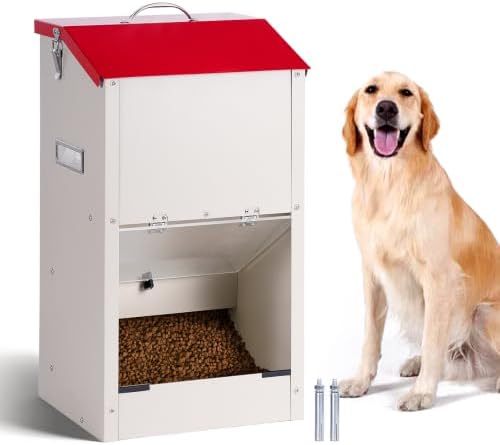
KHEARPSL Galvanized Gravity Feeder — 25 lb
The matched listing is the 25-pound galvanized-steel gravity feeder with a clear door. It can be wall-mounted or placed on the floor and requires assembly. Gravity feeding provides continuous access, without a timer or measured portions.
We have not verified an independent water-resistance rating or a pest-proof guarantee. Use a sheltered, dry location and inspect stored food regularly.

ChiPak Stainless Steel Timed Feeder — 16 L
The listing is marketed as 16 L; its selected size is labelled 16.1 L. It describes a stainless-steel body and programmable feeding schedule. Confirm the selected capacity and supplied power equipment before ordering.
The listing describes power-loss memory, which does not establish that feeding continues during an outage. We have not verified battery backup or an IP water-resistance rating. Use sheltered placement and confirm installation requirements with the seller.
Quick Checklist Before You Buy
- Genuinely sealed hopper and housing, not just water-resistant in the fine print
- Pest defense appropriate to what’s actually in your area — raccoons, birds, or insects
- A power plan: gravity (no power needed) vs. battery, and how you’ll handle battery life in extreme heat or cold
- Covered placement (roof, overhang, enclosure) regardless of what the feeder itself claims
- Realistic expectations about timer/electronics reliability outdoors vs. a simple mechanical gravity design
Decision guide
Outdoor feeder checklist
Shelter and food
Use a covered, dry location. Outdoor humidity, heat and rain can spoil food or jam the dispensing path.
Pests and stability
Look for a secure lid, stable base and protected opening. No feeder is automatically wildlife-proof.
Power and upkeep
Confirm battery backup, inspect seals and clean more often than you would indoors.
Estimate portions with the food calculator, then compare large-capacity and timed feeders.
Frequently Asked Questions
Do I need an electric feeder for outdoor use, or is gravity enough?
Gravity is enough if you don’t need portion control or scheduling — it’s also the most weather- and temperature-resistant option since there’s nothing electronic to fail. An electric timed feeder adds real convenience but comes with more that can go wrong outdoors.
Does cold weather actually affect an outdoor dog feeder?
Yes — cold drains batteries faster and can make electronics behave unpredictably, and heat has its own toll on battery life and housing materials. This is one of the strongest arguments for a fully mechanical gravity feeder in a climate with real seasonal extremes.