
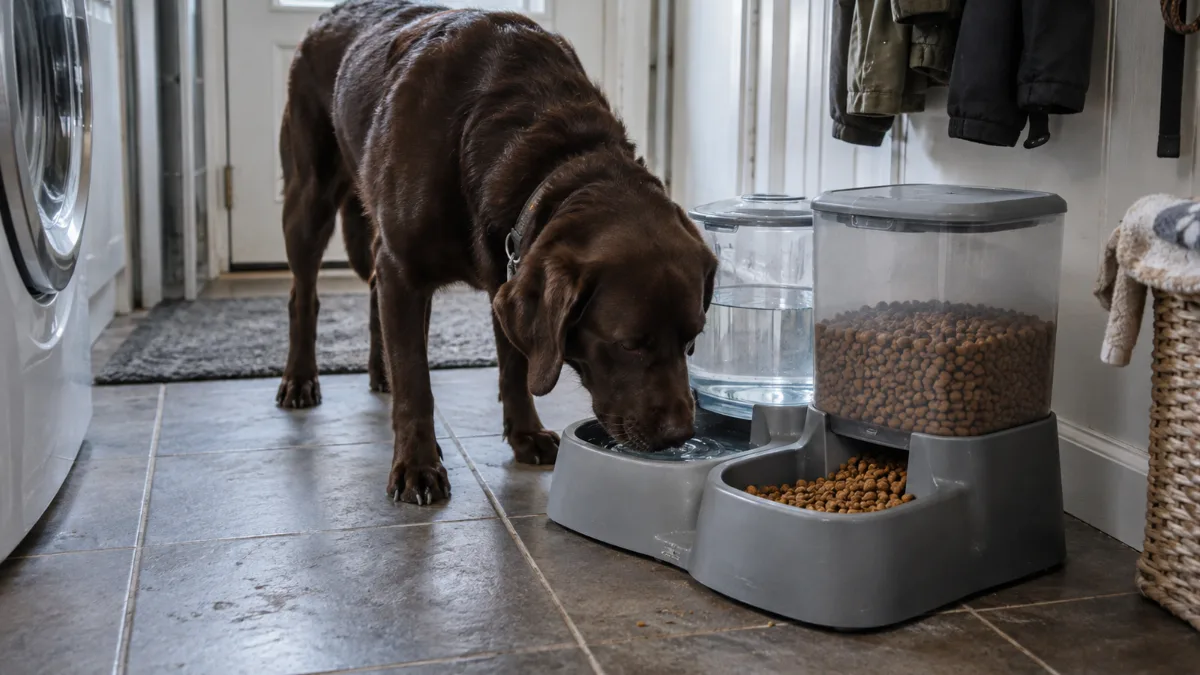
True Combo Unit vs. a Feeder-and-Waterer Set
This is the biggest distinction in the category. A true combo unit is one integrated device — a single housing with a food hopper on one side and a water reservoir on the other, sometimes electric with scheduling. A feeder-and-waterer set — often marketed as dog automatic feeders and waterers — is two separate, unpowered gravity containers bundled together: a dry food hopper and a plain water jug, each refilling itself by gravity as your dog eats or drinks. Neither is objectively better. A gravity set is cheaper and has nothing to fail electronically; a true combo unit gives you food scheduling a gravity set can’t offer. What matters is buying the one you actually meant to.
Sizing It for a Dog, Not a Cat
The same “2-in-1” product category also serves cats, and dog-sized needs are usually bigger — more food volume, more water, sturdier housing. An automatic dog feeder and water bowl sized for a small dog can run dry within a couple of days for a large breed. If you have a large or giant breed, check food and water capacity carefully rather than assuming “dog-labeled” means sized for your dog specifically — our automatic dog feeder for large dogs guide covers hopper capacity and heavy-duty construction in more depth if that’s the bigger concern for you, and our automatic water dispenser for dogs guide covers water-side sizing and mechanisms (gravity, hose-fed, fountain) if you want to go deeper on that side alone.
Gravity vs. an Actual Water Fountain
On the water side of a combo unit, there’s a real difference between a static gravity reservoir and an actively circulating fountain. Many dogs drink more from moving water than a still bowl, which is part of why fountains are often recommended for dogs that don’t drink enough on their own — a plain automatic dog feeder water reservoir is still better than an untouched bowl, just not equivalent to a circulating fountain. See the water dispenser guide linked above for the fuller breakdown of gravity, hose-fed, and fountain mechanisms.
Adding a Timer to the Mix
Some combo units also add scheduling — an automatic dog feeder and water with timer programs food portions on a schedule while the water side stays gravity-fed or fountain-based. The scheduling mechanism itself works the same way as any timed feeder; see our timed dog feeder guide for how that works in detail, since this page’s focus is the food-and-water combination rather than the timing mechanics.
Recommended Dog Food-and-Water Setup

iPettie FW54 WiFi Feeder and Waterer
Best for: A combined dry-food feeder and gravity waterer.
- 176 oz food and 123 oz water capacity
- filtered, non-circulating gravity water
- WiFi scheduling with battery backup
Reliable integrated dog-sized combo units are limited, so our preferred approach is a same-brand pair: a programmable feeder for measured meals and a separate high-capacity gravity water station. These are two independent products, not one integrated appliance.

PetSafe Healthy Pet Simply Feed
A programmable dry-food feeder with adjustable meal scheduling for the food side of the setup.

PetSafe Healthy Pet Water Station — Large
A large gravity reservoir with a stainless-steel bowl for the water side of the setup.
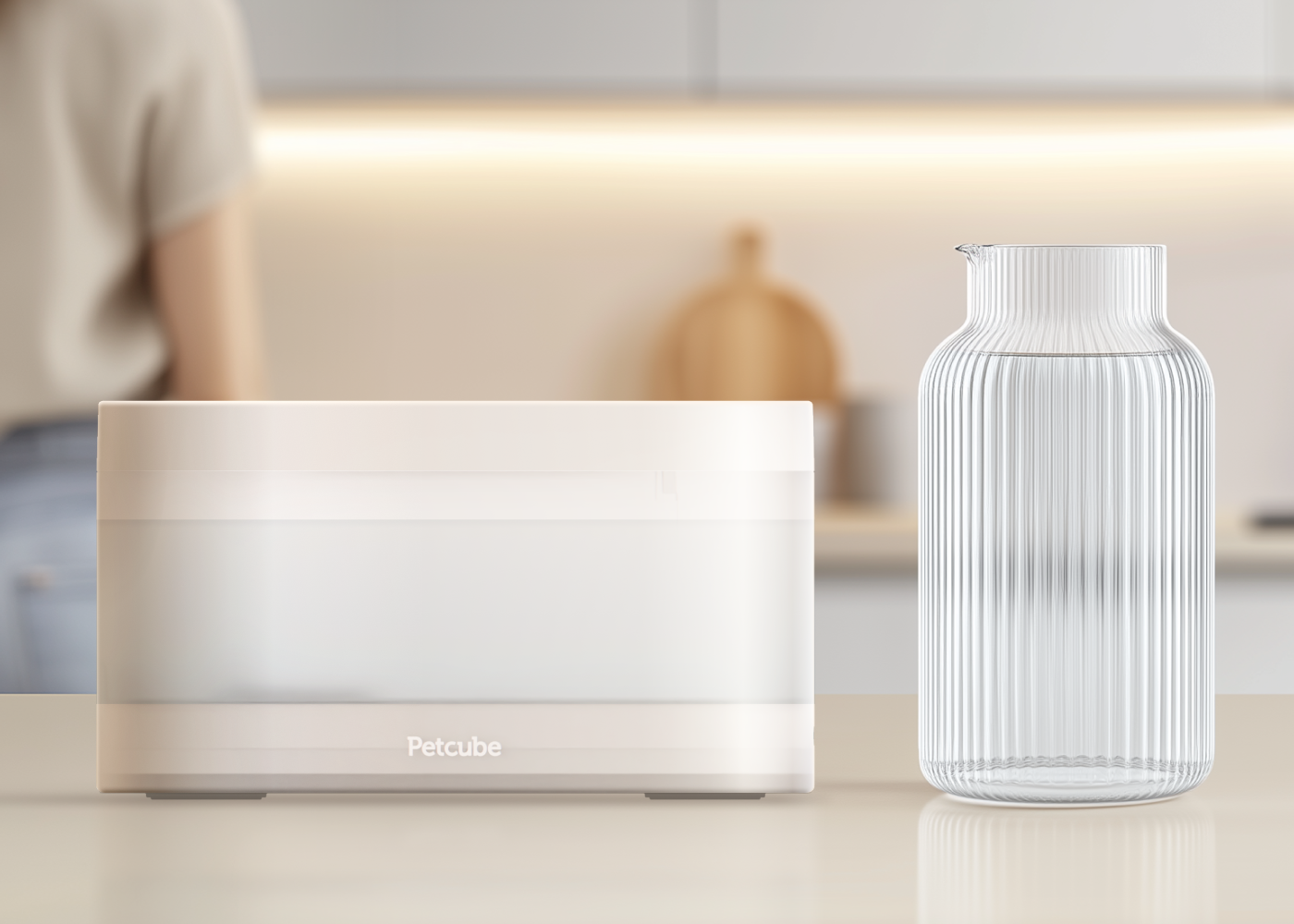
Petcube Fountain
A filtered 1.7 L fountain with rechargeable battery backup for the water side of a feeder-plus-water setup.
Why separate devices? You can position the water away from dry food, clean each component independently, and replace one side without discarding the other.
What to Look for Before You Buy
- Confirm it’s one integrated unit if that’s what you want, not two separate gravity containers sold as a set
- Size both food and water capacity to your dog’s size, not a generic “dog” label
- Decide if a fountain is worth the extra upkeep, or if a gravity reservoir is enough
- If electric, check for battery backup so a power outage doesn’t skip a scheduled meal
- For a large or giant breed, verify capacity explicitly rather than assuming it scales up automatically
Placement and cleaning matter as much as capacity
Keep the water station far enough from the food outlet that splashes cannot dampen kibble or reach electrical components. A separate setup makes this easier and lets you place the water where your dog naturally drinks. Use a washable mat, leave clearance for removing the reservoir, and confirm that the filled station will not slide or tip when a larger dog pushes against it.
Reservoir size does not remove the need for daily observation. Refresh the bowl, clean biofilm from wet surfaces, and check that the outlet has not become blocked. For the food side, test several scheduled portions with your dog’s actual kibble before relying on the feeder during a long day away.
If you only need dependable hydration, compare the options in our dog water dispenser guide. For scheduled meals without a combined setup, see timed dog feeders; owners of larger breeds should also verify hopper and bowl dimensions in the large-dog feeder guide.
Decision guide
Integrated combo vs. separate feeder and fountain
Integrated combo
Can reduce clutter and simplify one feeding station. Check bowl size and cleaning access; servicing one side may interrupt both food and water.
Separate units
Gives more control over placement, capacity and replacement, especially for larger dogs, but needs more room and maintenance points.
Compare large-breed feeders, water dispensers, and estimate portions with the food calculator.
Frequently Asked Questions
Is an automatic dog food and water dispenser actually automatic on both sides?
Not always. Many budget sets are just two gravity containers — nothing scheduled or powered about the water side. Only true combo units with an electric hopper or fountain automate both food and water.
Do I need a bigger unit for a large dog?
Yes — most “dog and cat” combo units are sized for smaller pets by default. For a large or giant breed, check both food and water capacity specifically rather than assuming a dog-labeled product is sized for your dog.