
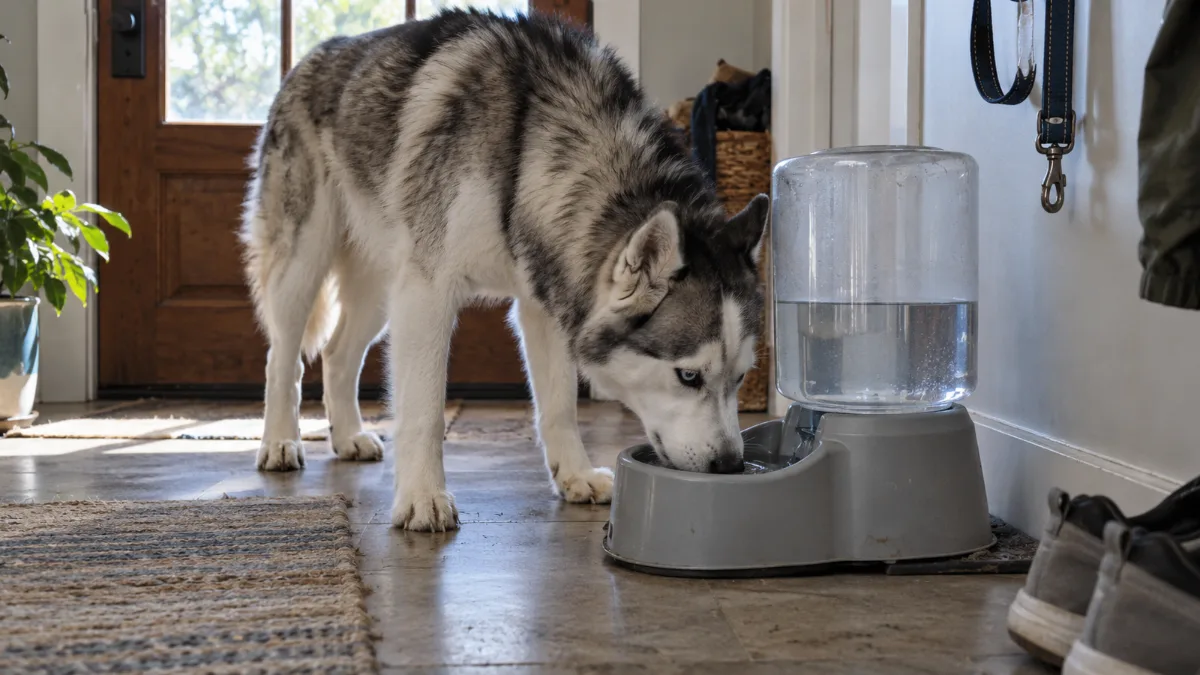
How Self-Water Feeders Actually Work
A dog self water feeder — also called a self water dispenser for dogs, self water feeder for dogs, or gravity water feeder for dogs — is the simplest and most common type. You fill and invert a sealed reservoir over an open bowl; as your dog drinks and the water level drops, air enters the reservoir and lets more water flow down to refill the bowl automatically. No power, no moving parts beyond gravity itself, and no valve to fail. The tradeoff is that it’s still a finite reservoir — once it’s empty, it’s empty, so capacity has to match how long you’ll be away and how much your dog drinks.
Hose-Connected Waterers: Never Refilling by Hand
A step up from gravity is a float-valve waterer connected directly to a hose or outdoor spigot. A float valve shuts off the flow when the bowl reaches the right level, and opens again as your dog drinks the level down — functionally the same idea as a toilet tank, and it means the bowl never runs dry as long as the water line stays connected. This is the practical choice for a large dog, multiple dogs, or an outdoor/farm setup where hand-refilling a jug regularly isn’t realistic.
Fountains: When Moving Water Is Worth the Extra Upkeep
An indoor water fountain draws from an internal tank and circulates it with a small pump, often through a filter. The appeal is the same reason fountains matter for cats: many dogs drink more from moving water than from a still bowl, which helps dogs that don’t naturally drink enough on their own. The tradeoff is real upkeep — these need power (wall outlet or battery), a filter changed on a schedule, and more attention than a gravity setup, since a pump and filter both create surfaces where buildup can collect if neglected.

Dog Mate Large Two-level Pet Fountain
Best for: Homes with dogs of different heights sharing one fountain.
- 200 fl oz capacity (about 5.9 L)
- two drinking levels
- three-stage filtration; ramp to reduce splashing
Sizing It for Your Dog: Large Automatic Water Dispenser for Dogs
Bigger dogs drink more, and reservoir sizes for these dispensers range from a few cups up to multiple gallons, plus the effectively unlimited option of a hose-connected unit. A large automatic water dispenser for dogs is worth the bigger footprint if you have a large breed, multiple dogs sharing one bowl, or stretches where no one’s refilling it daily — a small reservoir sized for a toy breed empties fast under those conditions. If you’re also looking at food-side capacity for a large dog, see our automatic dog feeder for large dogs guide for that side of the setup. If you’d rather combine both needs in one footprint, our dog food and water dispenser guide covers combo setups and their trade-offs.
Keeping It Clean: Algae and Buildup
Every type here needs regular cleaning, not just the fountain. Check the reservoir, valve, and — for fountains — the pump and filter often, and clean the drinking surface before slime or buildup collects rather than after. Outdoor units need more frequent attention than indoor ones, since dust, grass clippings, insects, and bird activity all find their way into an open bowl outside. A gravity feeder is the lowest-maintenance option specifically because it has the fewest parts for buildup to hide in.
Among options worth considering, the best automatic water dispenser for dogs really depends on your setup: a simple gravity jug for one dog indoors, a hose-connected float valve for a yard or multiple dogs, or a fountain if encouraging more drinking is the priority.
Recommended Dog Water Dispenser

PetSafe Drinkwell Stainless Multi-Pet Fountain
Best for: A plug-in fountain for shared indoor water access.
For a simple indoor gravity setup, one established option stands out more clearly than the generic dispensers in this category. It does not circulate or filter the water, but it keeps a large bowl supplied without relying on electricity.

PetSafe Healthy Pet Water Station — Large
A high-capacity gravity water station with a stainless-steel drinking bowl, suited to large dogs or multi-dog homes.
Important: This is a gravity waterer, not a circulating fountain. It still needs regular refilling, bowl washing, and reservoir cleaning.
Quick Checklist Before You Buy
- Match reservoir size to your dog’s size and how often you can realistically refill it
- Choose hose-connected if you have a large dog, multiple dogs, or an outdoor setup you don’t want to refill by hand
- Choose a fountain only if you’re prepared for the filter and pump upkeep it requires
- Stainless steel and other easy-to-clean materials hold up better to daily use than materials that scratch or stain
- Clean on a schedule regardless of type — outdoor units especially
Frequently Asked Questions
Is a gravity water feeder or a fountain better for dogs?
A gravity feeder is simpler and needs no power, but some dogs drink more from moving water. If your dog seems to under-drink from a still bowl, a fountain’s circulation can genuinely help — it’s just more upkeep in exchange.
How often does an automatic dog waterer need cleaning?
Check it regularly rather than on a fixed schedule — outdoor units build up dust, grass, and insects faster than indoor ones, and any type can develop slime on the drinking surface if left too long between cleanings.