
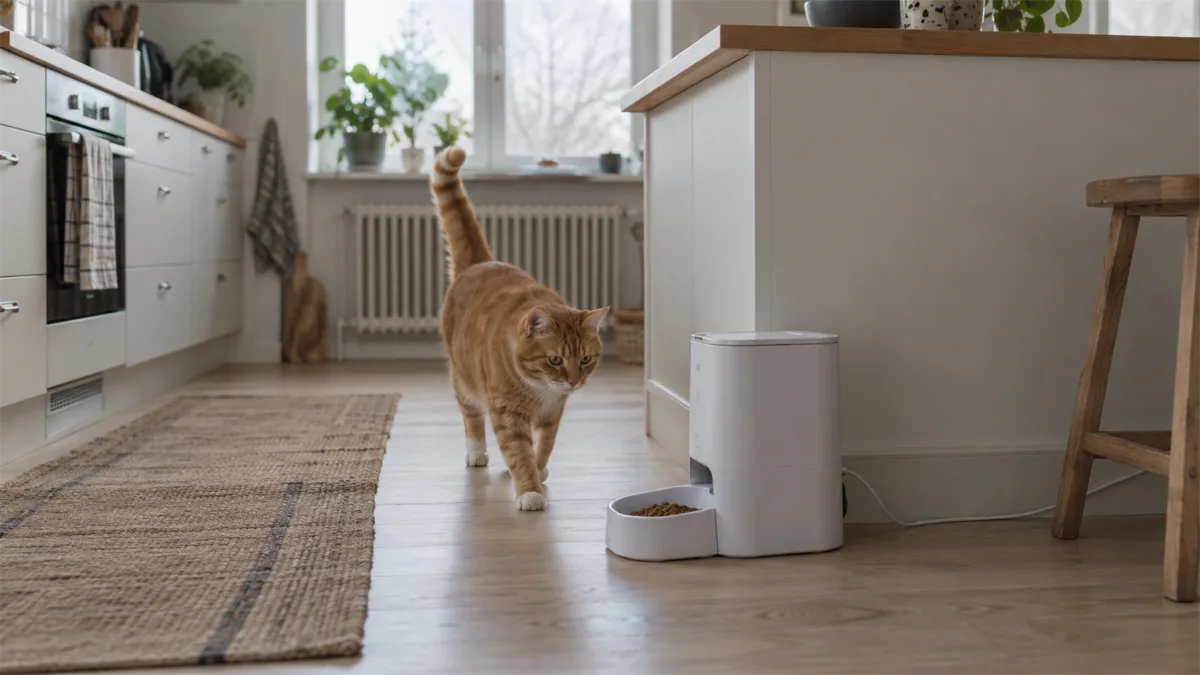
Explore by need
Find the right feeder for your cat
Choose a guide by food type, household setup, access control or the smart features you actually need.
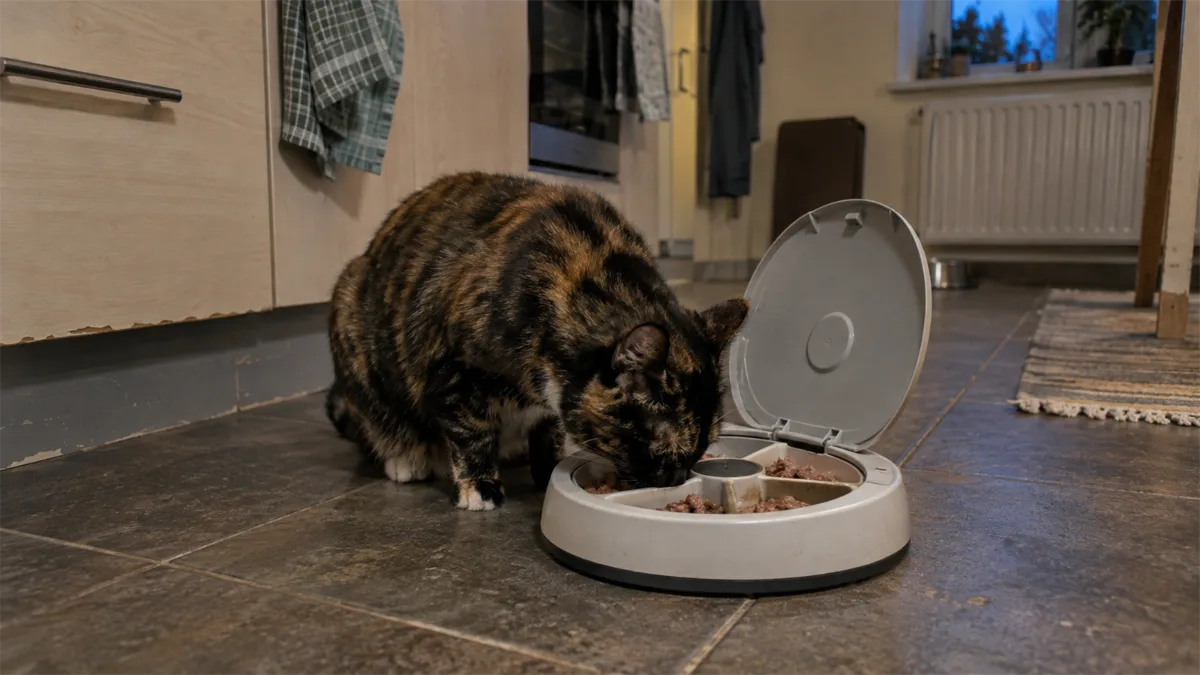 Wet foodAutomatic feeders built for wet food
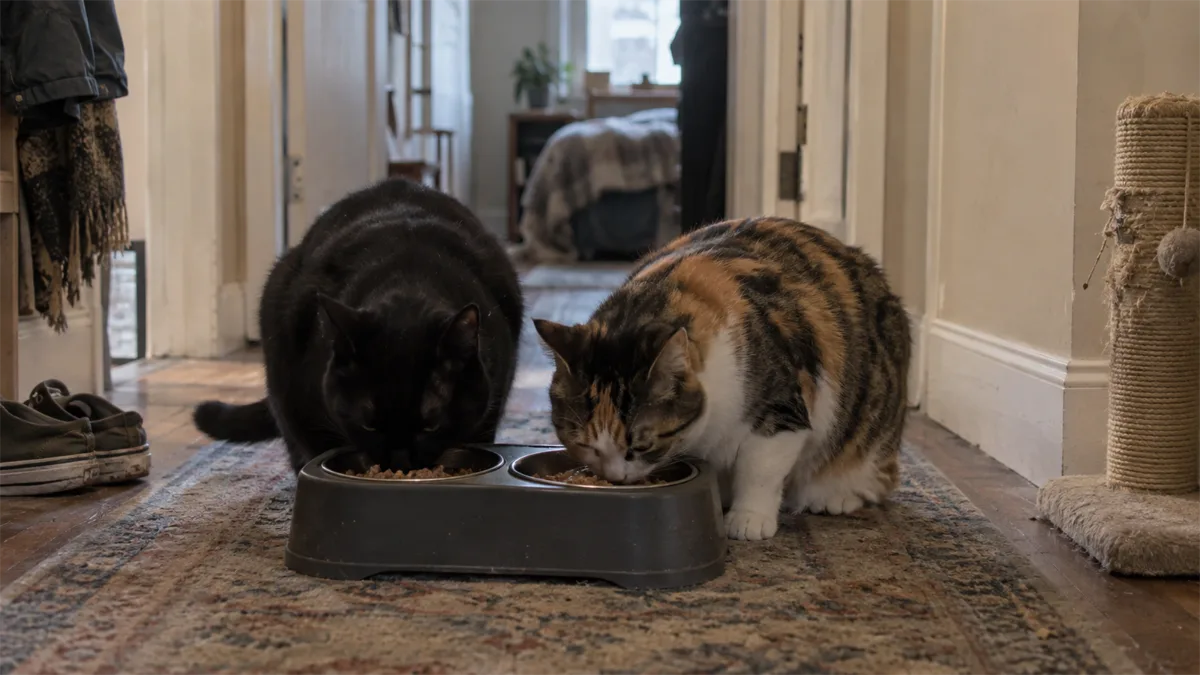 Multi-cat homesFeeders for two or more cats
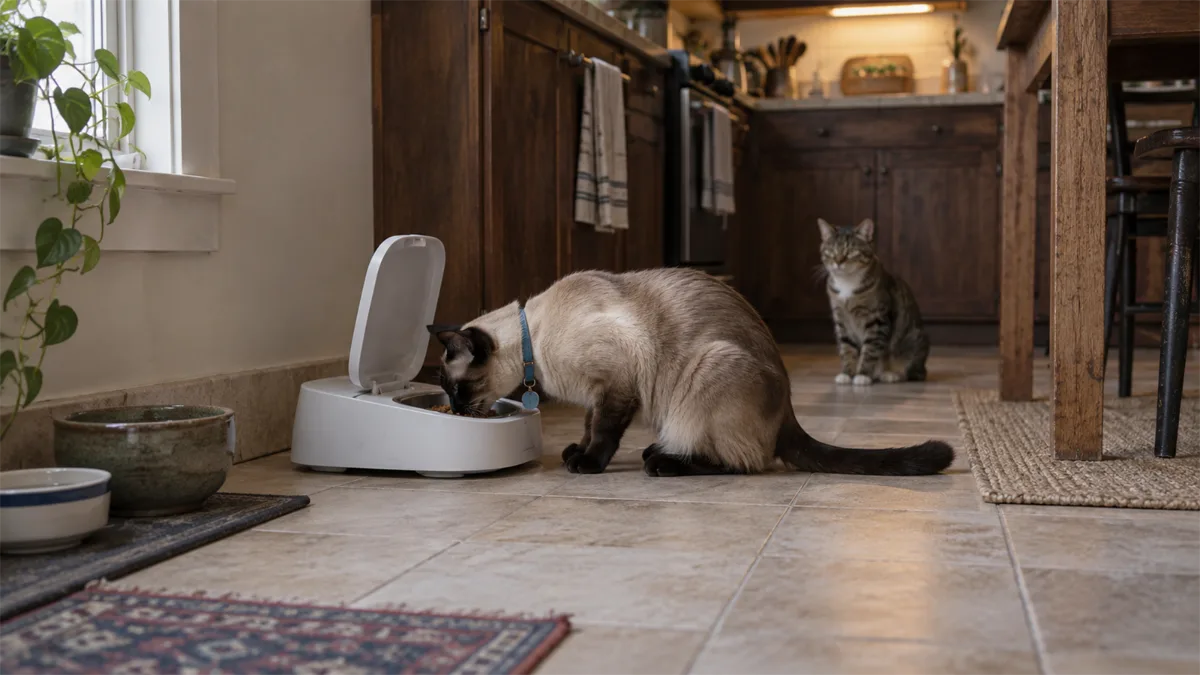 Access controlRFID and microchip cat feeders
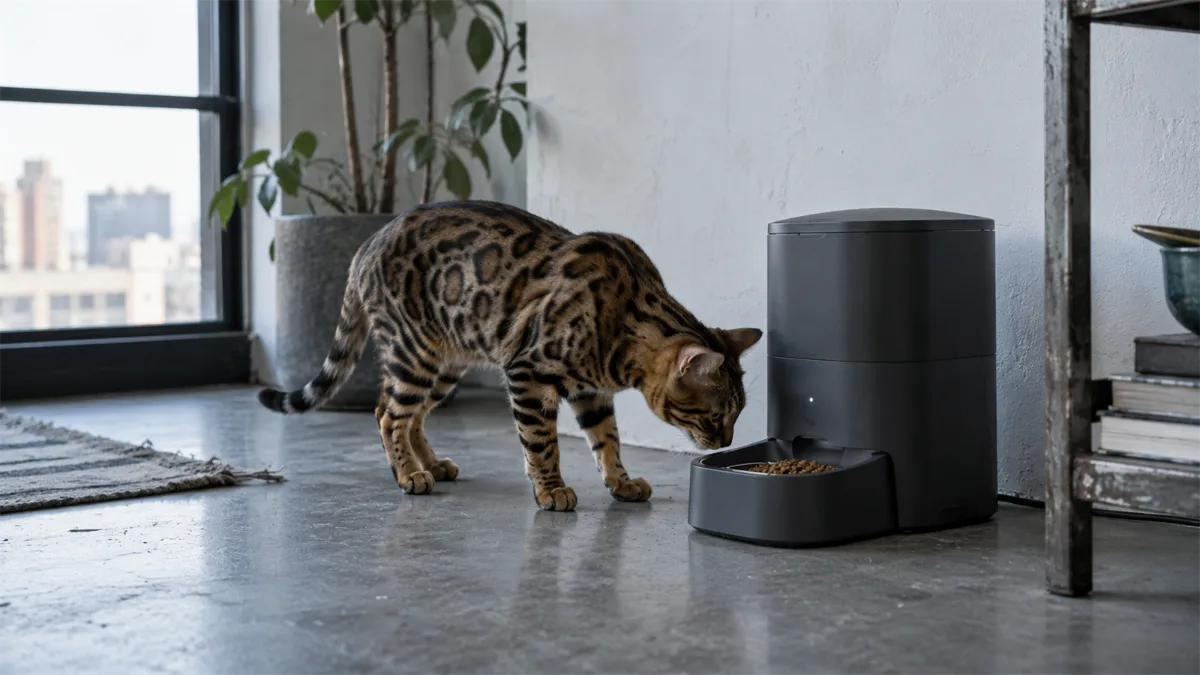 Smart controlsWiFi and app-controlled feeders
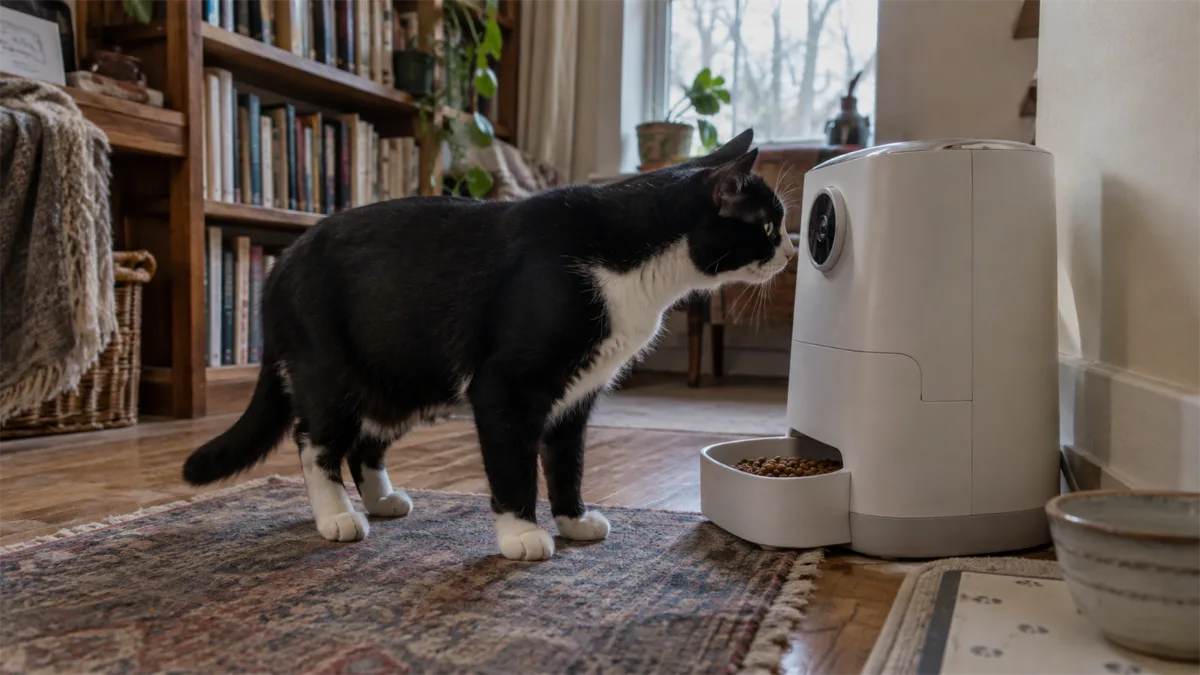 MonitoringCat feeders with built-in cameras
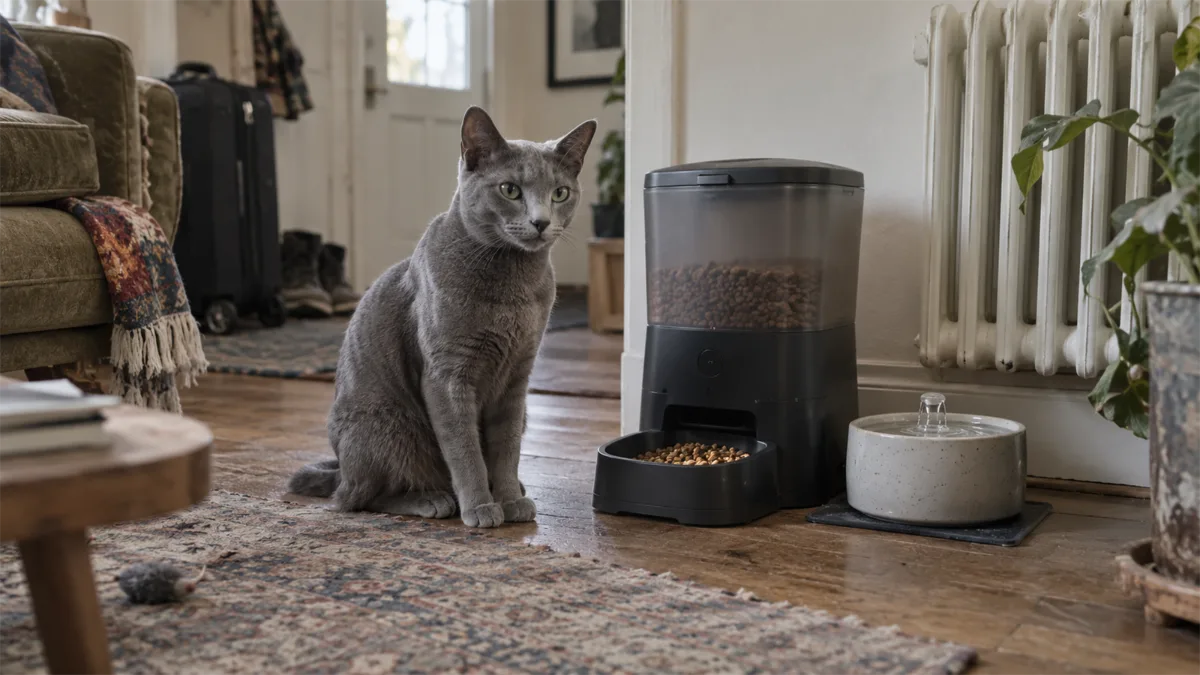 Time awayVacation feeders and backup planning
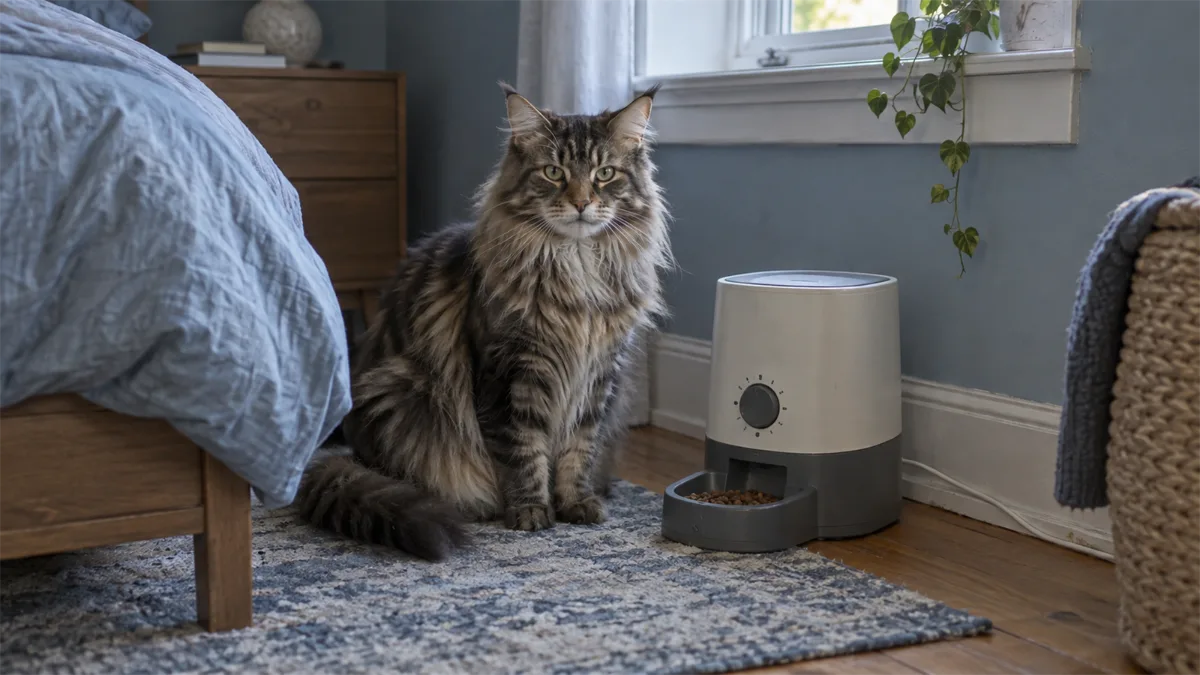 Simple schedulingTimed automatic cat feeders
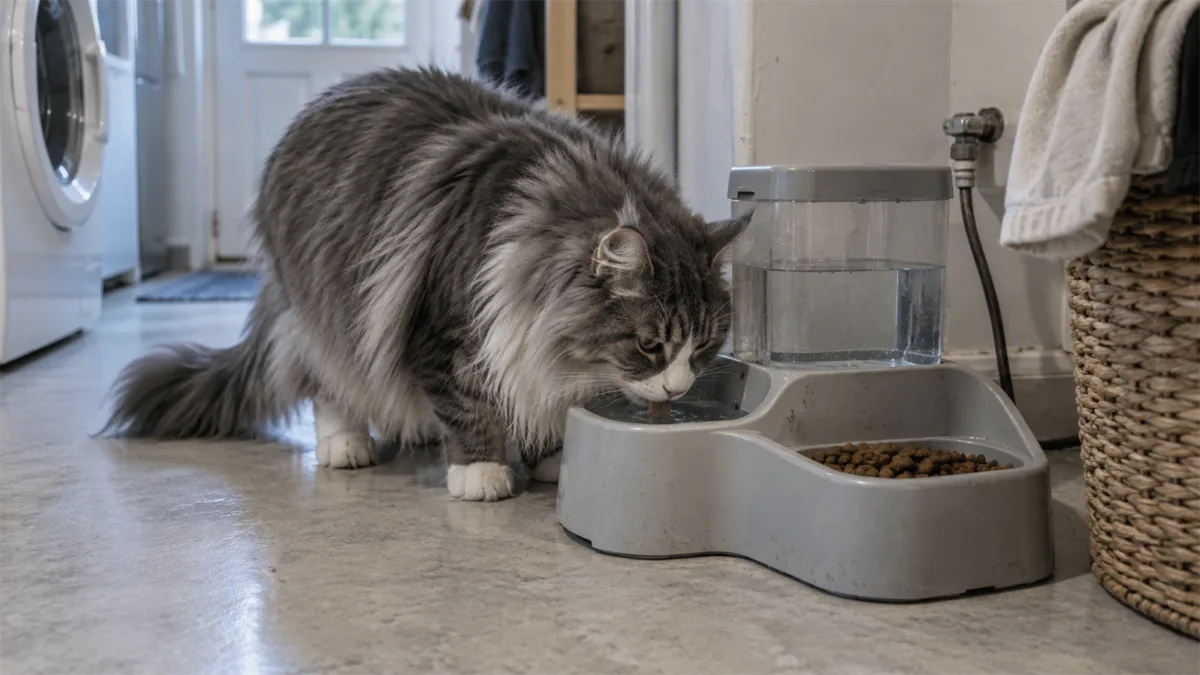 Food + waterFeeder and water dispenser combos
Planning an outdoor feeding setup? See outdoor and barn cat feeders or explore raccoon-resistant options →
Setting up the litter side too? Compare self-cleaning litter boxes →
Our top picks
Five feeders to start with
Use these five starting points to jump into the detailed reviews. The specifications table below covers all nine models.
See who researches BowlScout guides and how we keep product claims tied to maker documents.
Quick answer: Choose by food type first, then household and control needs. Use a cooled wet-food feeder for fresh meals, an RFID feeder when cats need separate access, or a timed feeder when reliable scheduling matters more than app features.
An automatic cat feeder solves one basic problem: getting food to your cat on schedule whether or not you’re physically there to do it. But “automatic cat feeder” covers a lot of different products underneath that one label, and the right one depends heavily on your actual situation: one cat or several, dry kibble or wet food, a simple timer or full app control, an indoor single-cat household or an outdoor colony setup. This guide rounds up our top rated automatic cat feeder picks across the categories that matter most, and links out to a deeper guide for each specific need — rather than trying to cram every use case into one page, which tends to leave every situation half-covered.
We’ve organized the picks below by what each feeder actually does best, since “best automatic cat feeder” genuinely means something different depending on whether you’re solving for one picky eater, three cats who steal each other’s food, or a week away with nobody checking in.
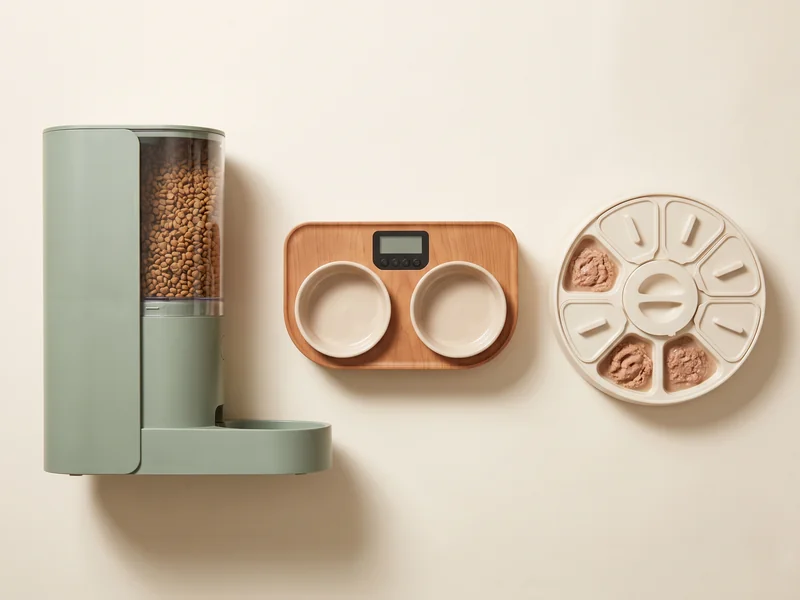
Dry Food vs. Wet Food: Picking the Right Base Type First
Before comparing specific models, it’s worth settling this one question, since it rules out most of the field immediately: most automatic cat feeders are built for dry kibble only, using a hopper and a rotating disk, auger, or drop mechanism that simply doesn’t work with wet or canned food. If your cat eats wet food — and canned food is the same thing as wet food, just a different word for it — you need a feeder specifically designed around sealed, often refrigerated compartments, not a dry-food hopper you’re hoping to improvise with. Trying to load wet food into a standard dry-food feeder is a food-safety problem, not just a mess. See the dry-vs-wet picks below, and our dedicated wet food feeder guide if that’s your situation.
How We Approach This List
We research each feeder by cross-checking manufacturer specifications, available documentation, established pet-care sources, and recurring patterns in owner feedback. The meaningful differences between models tend to be in the details — dispensing mechanism, stated capacity, power backup, app features, and cleaning requirements — rather than dramatic feature gaps. We update picks as models change and explain trade-offs rather than suggesting that one feeder is right for every cat. Read our full research and review methodology.
What to Look For Before You Buy
A few things matter across nearly every automatic cat feeder, regardless of which specific type you end up choosing:
Prefer a local timer? See the no-WiFi automatic cat feeder shortlist.
- Portion accuracy — the mechanism (rotating disk, auger, or measured drop) determines how consistently it dispenses the same amount meal to meal; cheaper units are more prone to drift over time, dispensing slightly more or less than programmed as internal gears wear
- Power backup — battery backup alongside any plug-in power means a scheduled meal still happens if the power goes out; don’t assume every plug-in model includes this, some genuinely don’t
- Capacity vs. refill frequency — bigger isn’t always better if you’re only feeding one cat; a huge hopper sitting mostly full for weeks means stale kibble sitting longer than it should, so match capacity to how often you’re actually willing to refill and clean, not just the biggest number available
- Wet vs. dry compatibility — most budget and mid-range feeders are dry-food only; wet food needs a feeder built specifically for it, with cooling and sealed compartments, since wet food left out at room temperature isn’t safe for more than a couple of hours
- Easy-to-clean parts — dishwasher-safe bowls and a hopper you can actually reach into and wipe out save real hassle over time; a feeder that looks great in photos but has an awkward, hard-to-access hopper gets used less carefully than it should
- Noise level — motorized dispensing mechanisms vary a lot in how loud they are, which matters more than people expect if a nervous cat startles at the sound and avoids the feeder afterward
Specifications at a glance
| Feeder | Best for | Capacity | Power |
|---|---|---|---|
| SureFeed Microchip Feeder | Overall / multi-cat access control | 1.6 cups | Battery |
| Cat Mate C500 | Budget | 5 meals, 1.45 cups each | 3 AA batteries |
| PetLibro Granary WiFi | Smart / app control | 5 L (dry food) | Dual power + battery backup |
| PetLibro Polar | Wet food | 7.4 oz per compartment | Plug-in + battery backup |
| PetSafe Eatwell 5-Meal | Most versatile | 5 cups total | 4 D batteries |
| PetLibro One RFID | Premium RFID | 3 L (~13 cups) | Corded + 3 alkaline D backup batteries |
| PETLIBRO Granary Camera PLAF203 | Camera monitoring | 5 L; 20 ml portion steps | Plug-in + battery backup; camera/Wi-Fi off on backup |
| WOPET Patrol F07 Pro | Long absences / large capacity | 6 L (dry food) | Dual power + battery backup |
| Pawsync | Precise gram/ounce portions | Not specified | App + battery backup |
Prices, availability, app features, and model specifications can change. Confirm current details with the retailer or manufacturer before buying.
Best Overall: SureFeed Microchip Cat Feeder

Best Overall
SureFeed Microchip Cat Feeder
- Reads your cat’s existing microchip or an included RFID collar tag — genuine access control, not a novelty
- Keeps food fresher and pests out between meals since the dish stays sealed until the right cat approaches
- 3-year warranty and a stainless steel bowl option available
- Small 1.6-cup capacity means daily refills, not a multi-day solution
- Not programmable for scheduled meal times — solves access control, not portion timing
- Battery-only on the base model; open-back design lets a determined second cat sneak in without the optional rear cover
A single-dish feeder that reads your cat’s existing microchip or an RFID collar tag and only opens for that specific cat — genuinely useful if you have multiple cats and need to stop one from eating another’s food, not just a novelty. The dish stays covered until the right cat is detected close enough, then opens automatically and closes again once they walk away, which also helps keep food fresher and pests out between meals. Capacity is modest at 1.6 cups and it isn’t programmable for scheduled meal times, so it solves access control rather than portion scheduling — if you also need timed meals, you’re better served by pairing it with a schedule-focused feeder or looking at a model built for both. If RFID/chip-based access is what you’re after specifically, our RFID cat feeder guide goes much deeper on how sensor lids, collar tags, and tamper-proofing work.
Best Budget: Cat Mate C500

Best Budget
Cat Mate C500
- 5 separate meal compartments at ~1.45 cups each — no app or WiFi to configure
- Includes 2 reusable ice packs for wet-food meals; cooling depends on room conditions
- Dishwasher-safe bowl and lid, tamper-resistant design, runs ~12 months on 3 AA batteries
- Manual meal measuring rather than precise programmable portions
- More frequent refills than a larger hopper-style feeder
- No remote monitoring or app confirmation that a meal actually dispensed
A simple rotating-dish feeder that holds 5 separate meals at about 1.45 cups each, running on 3 AA batteries with no app or WiFi involved — about as close as this category gets to “buy it, load it, forget about the electronics.” It comes with two reusable ice packs for wet-food meals. The maker advises testing the feeder in its intended location because cooling depends on room conditions; do not assume a fixed safe duration. The tradeoff for the low price is manual meal measuring rather than a precise programmable portion, and more frequent refills than a larger hopper-style feeder — reasonable for someone who wants automation without paying for app connectivity they won’t use.
Best WiFi/Smart: PetLibro Granary WiFi

Best WiFi/Smart
PetLibro Granary WiFi
- 5 L dry-food hopper with adapter power and three D batteries available as backup
- Supports both 2.4GHz and 5GHz WiFi — many competitors are locked to 2.4GHz only
- Measured-amount portioning is more consistent than loose-volume disk feeders
- Dry food only — not an option if your cat eats wet food
- App setup and WiFi pairing add a step basic timer feeders don’t require
- Desiccant packs need replacing roughly every 14 days to keep kibble fresh
The PETLIBRO Granary WiFi PLAF103 is an app-controlled dry-food feeder with a 5 L hopper, adapter power and three D batteries available as backup. PETLIBRO lists both 2.4 GHz and 5 GHz WiFi support. How long a full hopper lasts depends on the food and your cat’s measured daily ration. It’s dry food only and portions by measured amount rather than loose volume, which helps keep dispensing consistent meal to meal compared to disk-style feeders. For the full picture on WiFi, Bluetooth, and voice assistant compatibility across this category — including which brands actually support Alexa or Google Assistant versus just claiming to be “smart” — see our smart cat feeder guide.
Best for Wet Food: PetLibro Polar

Best for Wet Food
PetLibro Polar
- Genuinely refrigerated, not just an ice pack — rated to keep meals fresh up to ~3 days per the manufacturer
- Sealed, individual compartments built specifically for wet or canned food
- Wall power with AA battery backup
- Limited to scheduled feeding windows only — no free access between meals
- 7.4 oz per compartment caps how much can be pre-loaded per sitting
- Needs regular washing after nearly every use, more hands-on than a dry-food hopper
Price: Check current price — refrigerated wet-food feeders run at the premium end of the category
A refrigerated, compartmentalized feeder built specifically for wet or canned food, keeping meals fresh for up to three days per the manufacturer rather than the couple of hours wet food is safe sitting out unrefrigerated. It runs on wall power with AA battery backup and is limited to its scheduled feeding windows rather than free access, which is inherent to how sealed-compartment wet food feeders work rather than a flaw specific to this model. Our automatic cat feeder for wet food guide covers the full category, including what “refrigerated” actually buys you, how canned and wet food are the same thing marketed differently, and how much cooling time really matters.
Most Versatile: PetSafe Eatwell 5-Meal

Most Versatile
PetSafe Eatwell 5-Meal
- Five one-cup compartments for dry or semi-moist food and treats
- 5 cups total across compartments, dish-style design
- Runs on 4 D batteries, no WiFi setup required
- No cooling packs, so not the pick for wet food over a long absence
- Fixed compartment size means portions aren’t adjustable the way a hopper feeder’s are
- No app or remote confirmation
A dish-style programmable feeder with five one-cup compartments for dry or semi-moist food and treats, running on 4 D batteries. The compartment design makes each meal capacity fixed, unlike an adjustable hopper feeder. It offers straightforward scheduled meals without an app; the manufacturer does not list refrigerated wet-food storage for this model.
Best Premium RFID: PetLibro One RFID Cat Feeder

Best Premium RFID
PetLibro One RFID Cat Feeder
- Compact footprint fits tighter spaces than most upright feeders
- Corded power + backup from 3 alkaline D batteries
- App setup for scheduling; 2.4 GHz and 5 GHz Wi-Fi support
- Reads a collar tag, not an implanted microchip — requires your cat to reliably wear the tag
- Dry-food only
- 3 L (~13-cup) dry-food capacity
Price: Check current price — compact RFID models typically run mid-range
The PETLIBRO One PLAF301 combines a 3 L (~13-cup) dry-food hopper, app scheduling and access through one paired collar tag; it does not read an implanted microchip. It uses corded power with backup from three alkaline D batteries. Like any RFID feeder, it requires your cat to actually wear a compatible tag consistently, which is worth factoring in if your cat is prone to losing collars, and it’s dry-food only. See the RFID guide for how collar-tag readers compare to microchip-reading feeders like the SureFeed above, plus how to keep a second cat or a tag-savvy cat from defeating the lock.
Camera pick
PETLIBRO Granary Camera PLAF203

PETLIBRO Granary Camera PLAF203
White 5 L single-bowl camera feeder with 1080p video, 2.4/5 GHz Wi-Fi and up to 10 meals daily. Dry kibble: 2–15 mm. Battery backup keeps schedules running but disables Wi-Fi and the camera. Cloud recording is optional and paid; a microSD card is sold separately.
The Granary Camera PLAF203 is a verified alternative to the previously listed PETKIT YumShare Solo 2 P572, not a newer PETKIT model. PETLIBRO specifies 1–50 portions of about 20 ml and up to 10 meals a day. Weigh a test dispense for your food. See the manufacturer’s PLAF203 specifications; regional power adapters differ.
Best for Long Absences: WOPET Patrol F07 Pro
Best for Long Absences
WOPET Patrol F07 Pro
- 6L hopper with app scheduling for up to 15 meals per day
- WiFi controls make schedule changes easy when you’re away
- Large dry-food capacity means fewer refills than compact feeders
- Dry food only
- Requires WiFi for remote app control
- A 6L hopper still needs a refill plan for longer trips
Price: Check current price — large-capacity hoppers typically sit mid-range
The WOPET Patrol F07 Pro combines a 6L hopper with app control and support for up to 15 scheduled meals per day, making it a practical option if you need reliable dry-food scheduling while you’re away. It’s dry food only, so for longer trips you still need a refill plan and a person who can check on your cat rather than relying on the feeder alone. If you’re specifically planning for a trip, our vacation cat feeder guide covers how to actually plan feeding for 2 to 14+ days away, since a bigger hopper alone isn’t the whole answer for longer trips — most guidance still recommends a human check-in past a few days regardless of hopper size.
Best for Precise Portions: Pawsync Automatic Cat Food Feeder
Best for Precise Portions
Pawsync Automatic Cat Food Feeder
- Weighs food in ounces or grams rather than approximate cup portions
- App-connected with battery backup built in
- Genuinely useful for a cat on a vet-directed feeding plan, not just marketing precision
- Overkill if your cat just needs food twice a day with no special portioning needs
- Capacity not clearly specified by the manufacturer — confirm before buying if you need multi-day coverage
- App dependency for full portion-precision features
A weight-based feeder that measures food in ounces or grams rather than cups or rough portions, connected through an app with battery backup built in. This level of precision matters more for a cat on a specific feeding plan than it does for a cat that just needs food twice a day — if cup-based “about this much” portioning has always felt imprecise to you, this is the category of feeder that actually solves that rather than just claiming to.
Another Option for Intake Tracking: Granary 2

PETLIBRO Granary 2
For: Tracking how much dry food one pet eats, with app scheduling and a built-in bowl scale.
Model PLAF105-01W is the base Granary 2, without a camera. The scale records food eaten and food left in the bowl; it does not dispense a target weight in grams. Dispensing still uses approximate portions, so calibrate with your own kibble. Granary 2 Vision, Duo and X are separate models.
Specification source: manufacturer page. Model and listing checked October 20, 2026; specifications are manufacturer claims, not hands-on test results.
Common Problems Worth Planning For
A few issues come up often enough across this category that they’re worth knowing before you buy rather than discovering after:
- Clever cats learning to defeat the mechanism — a determined cat can sometimes paw open a lid, tip a light feeder over, or nudge a disk-style dispenser to release extra food. Weight and a locking or motion-triggered lid matter more than they sound like they would if you have a persistent cat.
- Jamming on certain kibble shapes or sizes — narrow chutes and small hoppers can jam on larger or irregularly shaped kibble; if you feed a large-kibble formula, it’s worth checking a feeder’s compatibility before assuming “cat feeder” means it handles your specific food.
- Startling noise — the motor sound on cheaper mechanisms can be loud enough to spook a nervous cat away from the feeder entirely, which defeats the purpose. Reviews that specifically mention noise level are more useful here than the spec sheet.
- Slow eaters and fast eaters both needing something different — a cat that eats too fast can benefit from a slow-feed style dispenser that spreads food out mechanically, while a genuinely free-feeding cat may not need scheduling at all beyond portion control.
What These Feeders Actually Cost
Pricing in this category roughly breaks into three tiers, and it’s worth knowing which one you’re shopping in before comparing feature lists directly. Basic battery-powered dish feeders with simple timers tend to run in the lower price range and cover the core need — food at set times — without app connectivity or premium materials. Mid-range hopper feeders with app control, dual power, and larger capacity step up from there, and this is where most of the “smart” category sits. Premium options — RFID/microchip access control, integrated cameras, or refrigerated wet-food compartments — cost more because they’re solving a more specific problem, not just because they’re newer. Paying for premium features you won’t use (a camera you’ll never check, RFID access with only one cat) is the most common way to overspend in this category relative to what you actually need.
Frequently Asked Questions
What’s the difference between an automatic cat feeder and an automatic cat food dispenser?
Nothing functional — they’re the same category described two ways. “Dispenser” and “feeder” are used interchangeably across brands and listings, and neither term signals dry vs. wet, smart vs. basic, or any other distinction on its own.
Do I need a smart/WiFi feeder, or is a basic timer enough?
A basic timer handles the core job — food at set times — for most single-cat households. WiFi and app control add remote confirmation and schedule changes from anywhere, which matters more if you’re often away or want peace of mind rather than a strict feeding need.
Are automatic cat feeder reviews from brands themselves reliable?
Treat manufacturer claims as a starting point, not the final word — capacity figures, “days of food” estimates, and durability claims are worth checking against independent reviews and real owner feedback, since marketing copy and actual day-to-day performance don’t always match, especially on portion consistency over time.
How many cats can one automatic feeder handle?
Most single-bowl or single-hopper feeders are really built for one cat — multiple cats sharing one feeder tends to mean the more dominant cat eats first and more. If you have more than one cat, our multiple cats guide covers dual-bowl and chip-restricted options built for that specifically.