
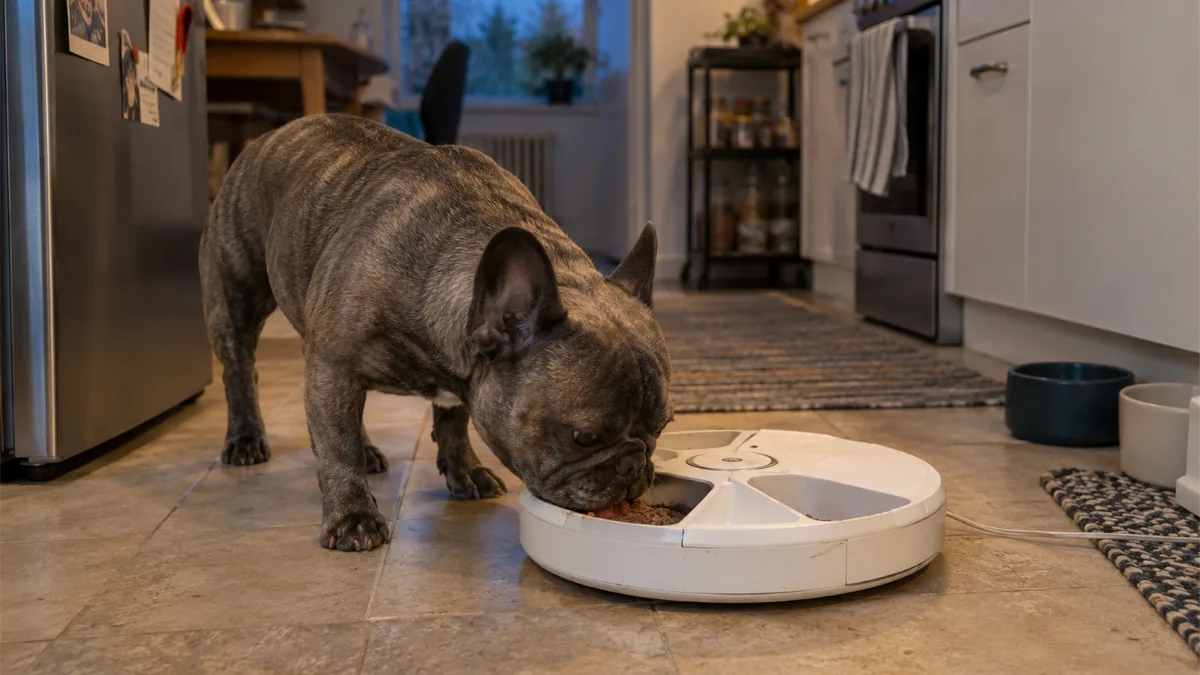
Why Wet Food Needs a Different Kind of Feeder
Wet food should not be left at room temperature for extended periods, and warmer conditions shorten the usable window. Follow the food manufacturer’s storage instructions and your veterinarian’s advice rather than relying on one universal time limit. A wet-food dispenser therefore needs separate compartments and a cooling method suited to the schedule and environment.
Ice Packs and Cooling: How These Feeders Handle Spoilage
Many automatic wet-food dispensers use one or two reusable ice packs beneath the compartments; some use active cooling. Neither approach should be assumed to refrigerate food indefinitely. Check whether cooling accessories are included, how long the manufacturer says the system maintains suitable conditions, and whether that guidance matches your room temperature and feeding schedule.
Sealed Trays, Not a Shared Hopper
A wet food dog feeder generally isn’t built around a single food reservoir the way a dry-food hopper is. Instead, most use a carousel or rotating tray design with separate, individually sealed compartments — one per meal. When it’s time to eat, the mechanism rotates and opens just that one compartment, while the rest stay sealed and (ideally) cooled until their turn. This is the structural reason automatic dog feeder wet food models can’t just scale up capacity the way dry feeders do — each meal needs its own sealed slot, not a shared bin.
The Cleaning Reality
This is the part that catches people off guard: a wet dog food dispenser needs the mechanism washed after essentially every use, not just refilled. Wet food residue left in a compartment attracts bacteria and odor fast, and unlike a dry hopper you can leave alone for weeks, this is genuinely more hands-on maintenance — factor that into whether a wet food auto feeder actually saves you effort day to day, or just shifts when you’re doing the work.
Time Limits: You Can’t Load It for a Week
Because of spoilage and the sealed-tray design, a canned dog food dispenser typically holds somewhere around 4 to 6 meals total — a few days at most, not the week-plus a dry feeder can manage. If you’re planning to be away longer than that, plan on a pet sitter or someone refilling and cleaning it, not just a bigger hopper — there isn’t a wet-food equivalent of “just buy the large capacity model” the way there is for dry food.
Recommended Wet-Food Feeders on Amazon

PETLIBRO Polar
Refrigerated single-bowl feeder designed to keep wet meals cool between servings.
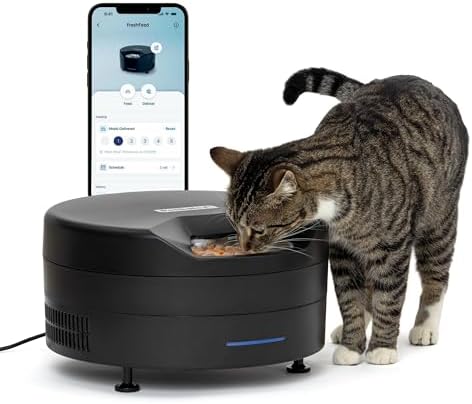
PetSafe FreshFeed
Refrigerated feeder for scheduled wet-food meals; confirm current capacity before purchase.

Cat Mate C500
Five-compartment cooled tray suitable for cats and small dogs.
Quick Checklist Before You Buy
- Confirm ice packs are included, not sold separately
- Check how many separate sealed compartments it has — that’s your real meal ceiling, not a capacity number in cups
- Plan on washing the mechanism after each cycle, not just refilling it
- Don’t rely on it for more days than its meal count and cooling can realistically cover
- If you also feed dry food, check whether the same unit handles both or whether you need a separate dry-food feeder alongside it
Match the tray to your dog, not just the meal count
A five-compartment tray may sound generous, but the useful capacity depends on the size of each compartment and the amount your dog needs per meal. Compare the compartment volume with the serving size from the food label and your veterinarian’s guidance. For a medium or large dog, a tray marketed for both cats and dogs may hold only a partial meal.
Cooling performance also depends on room temperature, how cold the food is when loaded, and how tightly each compartment seals. Refrigerated models reduce reliance on ice packs, but they still require regular cleaning and a dependable power source. Tray-style models are simpler and often easier to inspect, although their safe unattended window is usually shorter.
If your dog eats both dry and wet food, using separate devices can be more practical than forcing both formats into one machine. Compare timed dry-food feeders for scheduled kibble, or review food-and-water setups when hydration capacity is part of the same planning decision.
Decision guide
Rotating tray vs. ice pack vs. active refrigeration
Rotating tray
Cooling: none unless specified.
Best for: short, scheduled access.
Trade-off: holding safety depends on the food and room conditions.
Ice-pack tray
Cooling: reusable cold pack.
Best for: routines that fit the manufacturer’s pack instructions.
Trade-off: packs require refreezing and thorough cleaning.
Active refrigeration
Cooling: powered temperature control.
Best for: users who need a refrigerated system.
Trade-off: higher cost, power dependence and more parts to clean.
Check the exact feeder and food instructions rather than assuming a universal safe duration. Estimate portions with the Food Calculator, review food-and-water setups, or compare feeders side by side.
Frequently Asked Questions
Do I need an ice pack for an automatic wet food feeder?
Use the cooling method specified for the feeder and your planned interval. Do not rely on a universal room-temperature time limit; follow the food label and feeder instructions, and discard food when its time or temperature history is uncertain.
How many meals can a wet food dog feeder hold at once?
Most hold around 4 to 6 sealed meals, since each needs its own compartment rather than sharing a bulk reservoir. That’s a few days of feeding at most, not a week-long solution.