
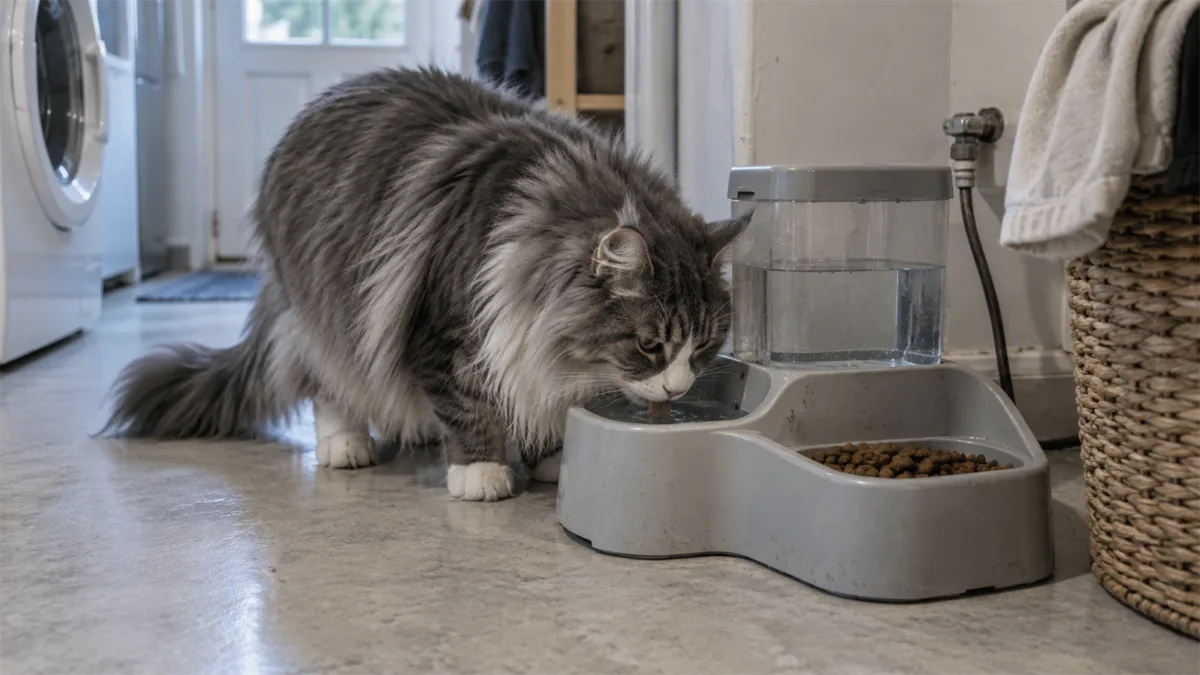
True Combo Units vs. a Feeder-and-Waterer Set
This is the biggest distinction in the category, and it’s easy to miss when skimming a product photo.
- A true combo unit is one integrated device — a single housing with a programmable food hopper on one side and a water reservoir or fountain on the other. These are usually electric, often with app scheduling, and cost more.
- A feeder-and-waterer set is two separate, unpowered gravity containers — a dry food hopper and a plain water jug — bundled together and marketed as a cat feeder water and food solution. There’s nothing automatic about the water side here; it’s just a large bowl that refills itself by gravity as your cat drinks, the same way a cat feeder and waterer combo has worked for decades before “smart” versions existed.
Neither is objectively better — a gravity set is cheaper, has no batteries to fail, and is genuinely low-maintenance. A true combo unit gives you scheduling and portion control on the food side, which a gravity set can’t do at all. What matters is buying the one you actually meant to buy.
Do You Need a Fountain, or Just a Water Dispenser?
On the water side, there’s a second distinction worth knowing before you buy. A gravity water dispenser is a static reservoir — water sits until your cat drinks it, refilling as the level drops. A water fountain actively recirculates the water through a pump and usually a filter.
This isn’t just a feature checkbox. Some cats prefer moving water, while others are comfortable with a still bowl or gravity reservoir. If hydration is the reason you’re considering a combo unit, choose a design your cat will actually use and that you can clean consistently. Speak with your veterinarian if you are concerned about low water intake or urinary health.
Filtered fountains need their cartridge changed on a schedule (typically monthly) and the pump cleaned regularly, or they’ll grow buildup faster than a simple gravity jug would. That upkeep is worth factoring in, not just the upfront price.
Power, Capacity, and What to Expect Day to Day
Gravity-only sets need no power at all, which is their main appeal — no batteries, no adapter, nothing to stop working while you’re away. True combo units are usually electric on the food side (some fountains run on their own separate power too), typically a wall adapter with battery backup so a power blip doesn’t skip a scheduled meal. If remote schedule changes and app alerts matter to you, our smart cat feeder guide explains what WiFi control actually adds. Food capacity across combo units commonly runs 3–5 liters, water side anywhere from about a liter up to a gallon depending on the model — enough for a few days to roughly a week for one cat, less if you’re feeding more than one. If you’re setting this up for more than one cat, portion fairness is worth a look on its own — see our guide to feeders for multiple cats.
Recommended Cat Feeder and Water Setups

ARENTI Feeder2 Kit
Feeder-and-fountain kit with a 4.5 L food hopper, 3 L water reservoir and 2K camera. This listing is the kit, not the feeder alone. Check app, cleaning and filter requirements before choosing a combined setup.

PetSafe Drinkwell Stainless Multi-Pet Fountain
Best for: A plug-in fountain for shared indoor water access.
There are two sensible ways to cover both needs: buy one combined unit for convenience, or pair a proven feeder with a separate fountain so each device can be cleaned, placed, and replaced independently.

oneisall Automatic Feeder and Water Dispenser
A true 2-in-1 setup that combines a programmable dry-food feeder with a gravity water reservoir.

PETLIBRO Granary WiFi Feeder
The food side of our preferred separate-device setup, with app-controlled schedules and portions for dry food.

PETLIBRO Dockstream Fountain
The water side of the separate-device setup, providing circulating water independently from the feeder.
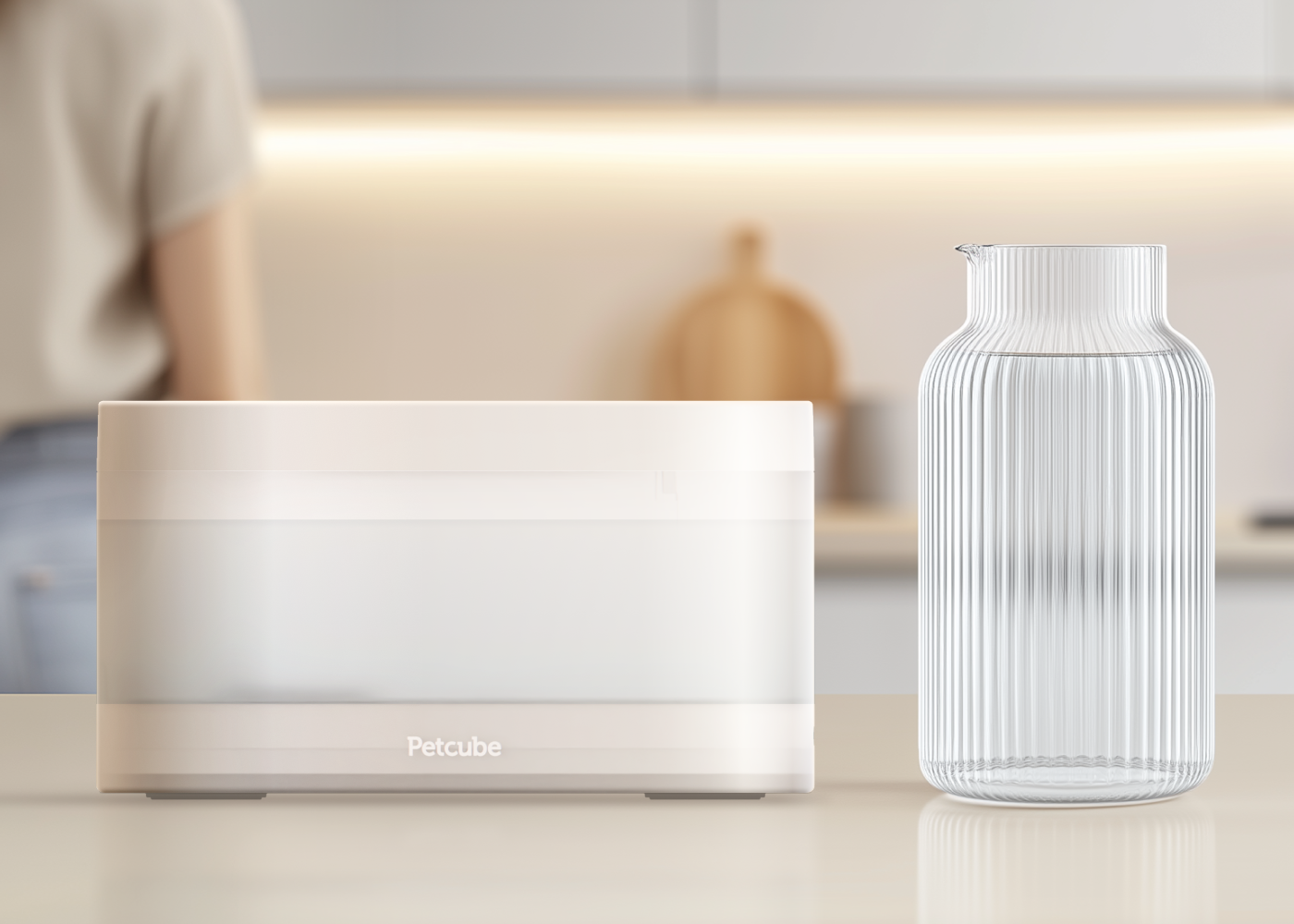
Petcube Fountain
A cat-focused smart water fountain with a 1.7 L tank, four-layer filtration, and a rechargeable battery.

PETLIBRO Dockstream 2 Smart Cordless
For: A separate battery-operated fountain that can be positioned independently of the feeder.
Model PLWF116 has a 3 L tank and a stainless-steel drinking tray. This is the Cordless version; the plug-in PLWF106 is a different model. The app can record water use, but it does not use RFID to separate individual pets. Allow for regular cleaning, filter changes and recharging.
Specification source: manufacturer page. Model and listing checked October 20, 2026; specifications are manufacturer claims, not hands-on test results.
Our take: The oneisall is the cleaner choice when you specifically want one combined footprint. PETLIBRO and Petcube are separate-device options instead, which usually makes placement, cleaning, and future replacement more flexible.
Quick Checklist Before You Buy
- Confirm it’s one integrated unit, not two separate gravity containers, if that’s what you want
- Decide if you actually need a recirculating fountain, or if a gravity reservoir is enough
- Check food and water capacity against how many cats you’re feeding and how often you can refill
- If electric, look for battery backup so a power outage doesn’t skip a meal
- Factor in filter/cartridge replacement cost for fountain models, not just the sticker price
Decision guide
Integrated combo vs. separate feeder and fountain
Integrated combo
Saves floor space and keeps feeding gear together. A failure, deep clean or replacement can take both food and water stations out of service.
Separate units
Lets you place water away from food and replace either device independently, but uses more outlets and floor space.
Also review timed feeders, wet-food feeders, or compare models side by side.
Frequently Asked Questions
Is a cat feeder and water dispenser set actually automatic on both sides?
Not always — many budget sets are gravity-fed on the water side, meaning there’s nothing scheduled or powered about it. Only true combo units with an electric fountain or reservoir automate both food and water.
Do I need a water fountain instead of a regular dispenser?
Only if encouraging your cat to drink more is a priority — moving water tends to get cats drinking more than a still bowl. A gravity dispenser is still better than an unattended bowl, just not equivalent to a fountain.